Last updated:
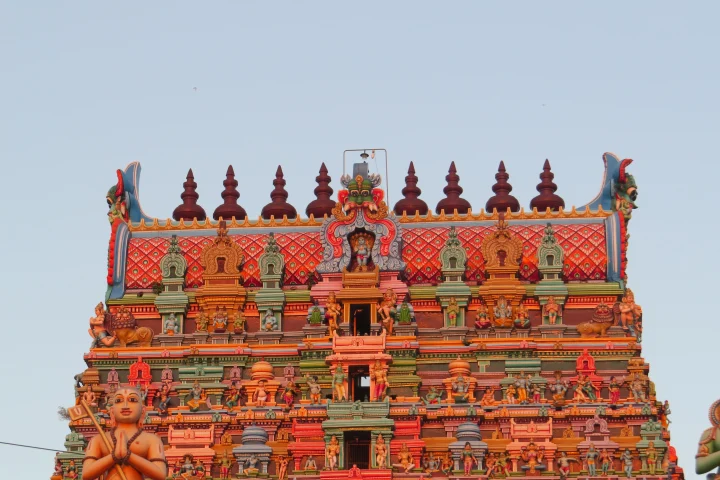
Courtallam, near Tenkasi in the far south-west of Tamil Nadu, is famous for its waterfalls on the Western Ghats. Right beside the Main Falls stands an old Shiva temple, the Kutralanathar Temple, and a short walk away is the Chitra Sabhai, the “painted hall” of Nataraja. It is one of the Pancha Sabhai, the five halls where Shiva is said to have danced.
Shiva is worshipped here as Kutralanathar, and the Goddess as Kuzhalvaimozhi Ammai, “she whose words are sweet as the flute”. The temple is a Paadal Petra Sthalam, sung by Sambandar, and is run by the HR&CE Department.
On this page
The legend of Agastya
According to the temple tradition, this was once a Vishnu temple. The sage Agastya is said to have placed his hands on the image of Vishnu and, by his power, shaped it into a Shiva lingam. Devotees say marks of the sage’s fingers can still be seen on the lingam.
The temple layout is said to recall this past: its plan is shaped like a conch, sacred to Vishnu, and the temple is sometimes called the Sanga Kovil. Another tradition says the pressure of Agastya’s hands left the Lord with a headache. To soothe it, the lingam is anointed with a herbal oil, and the oil and a medicinal night offering are given to devotees as prasadam.
A further legend says Agastya prayed here to see the wedding of Shiva and Parvati, which he had missed at Kailash, and the Lord showed it to him at Courtallam.
The Chitra Sabhai
The Chitra Sabhai stands on the northern side of the main temple. Its roof is made of copper plates, and its inner walls are covered with paintings made with natural dyes, showing gods, saints, scenes from the epics and Puranas, and kings. Nataraja is worshipped here in painted form. According to the district administration’s page, the work was begun under the Pandya king Parakrama Pandya in the 15th century.
The other four halls are the golden hall at Chidambaram, the silver hall at Madurai, the copper hall at Tirunelveli and the hall of gems at Thiruvalangadu.
Other highlights
- Shakti peetha: the Parasakthi shrine in the temple is counted among the Shakti peethas of the Goddess.
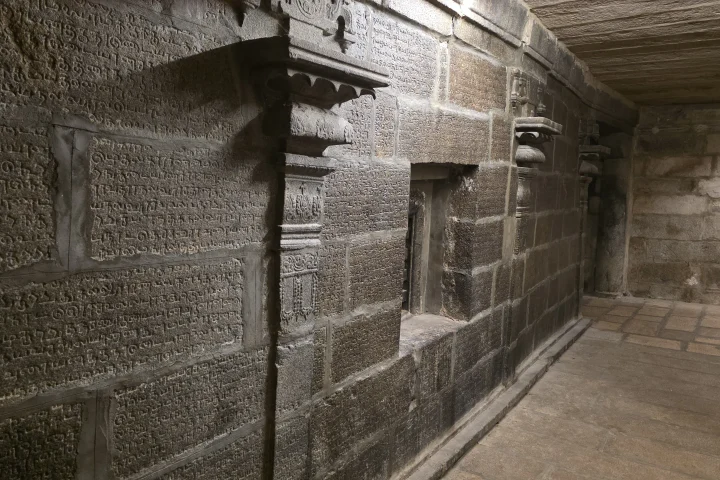
- Inscriptions: the temple has dozens of old inscriptions, some from the Chola period, recording gifts of gold, cattle and land.
- Temple cars: the temple has five festival chariots, for Vinayaka, Murugan, Nataraja, the Lord and the Goddess.
- Literature: the poem Kutrala Kuravanji by Thirikooda Rasappa Kavirayar celebrates this temple and its hills.
Darshan tips
- Many visitors bathe at the Main Falls first. Change into dry clothes before entering the temple.
- During the saaral season (June–September), weekends are very crowded and parking is hard; come on a weekday morning.
- Ask at the temple about the herbal oil prasadam if you would like to take some home.
Festivals and when to go
The temple’s calendar is long. The two Vishu festivals, in Chittirai (April) and Aippasi (October–November), last ten days each, and Margazhi Thiruvathirai is celebrated at the Chitra Sabhai with special worship of Nataraja. On Aadi Amavasai (July–August) the temple is lit with a great number of lamps, and the Thai float festival (January–February) is held in the temple tank.
The district page notes that the festivals of the main temple begin only after worship at the Shenbaga Devi Amman shrine on the hill, about 5 km away.
Dress code, phones and photography
Wear modest, traditional clothes. Follow the notice at the gate; at the time of writing many temples allow phones only if switched off; photography inside is not allowed. See our temple dress code guide.
How to reach
From Trichy: about 300 km, roughly 6 to 6½ hours via Madurai and Rajapalayam.
From Pondicherry: about 500 km, roughly 9½ to 10 hours. This is too long for one day in a car; most pilgrims break the journey in Trichy or Madurai, or take a train to Tenkasi and use our car from there.
Courtallam is about 7 km from Tenkasi railway station and about 60 km from Tirunelveli. Madurai and Thoothukudi are the nearest airports.
What to combine it with
Courtallam fits into a southern circuit with the Nellaiappar Temple, Papanasam on the Nava Kailasam route, and Srivilliputhur on the road from Madurai. See the Tirunelveli temple town page, our Pancha Sabhai tour and the Pancha Sabhai guide.
Frequently asked questions
Where is the Chitra Sabhai in Courtallam?
It is a separate hall on the northern side of the Kutralanathar Temple, close to the Main Falls. Its walls are covered with old paintings, and Nataraja is worshipped there in painted form.
Was Courtallam temple once a Vishnu temple?
According to the temple tradition, yes. Sage Agastya is said to have changed the Vishnu image into a Shiva lingam, and the conch-shaped plan of the temple is seen as a sign of its Vaishnava past.
What are the Courtallam temple timings?
The Tirunelveli district website gives 6:00 am to 12 noon and 4:30 pm to 8:00 pm. Timings may differ on festival days, so check before you go.
Can we visit Courtallam from Pondicherry?
It is about 500 km, roughly 9½ to 10 hours by road, so plan at least one night on the way, or take a train to Tenkasi and use our car from there. From Trichy it is about 300 km, roughly 6 to 6½ hours.