Last updated:
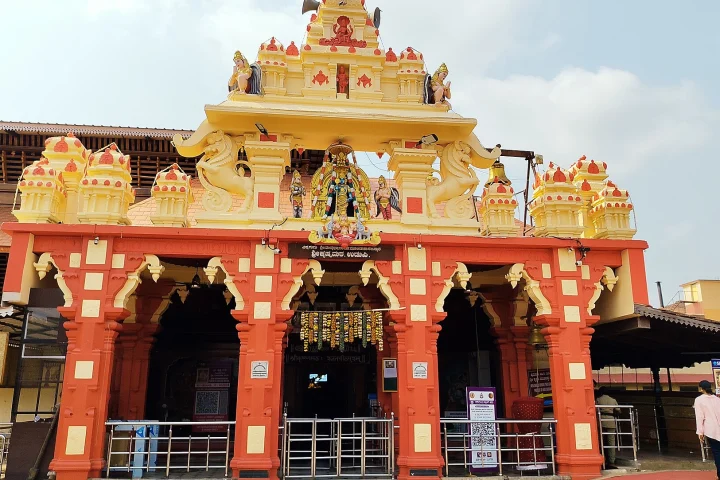
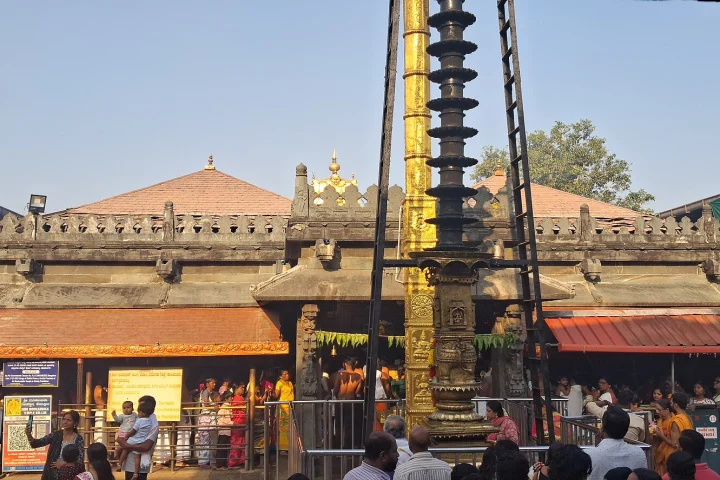
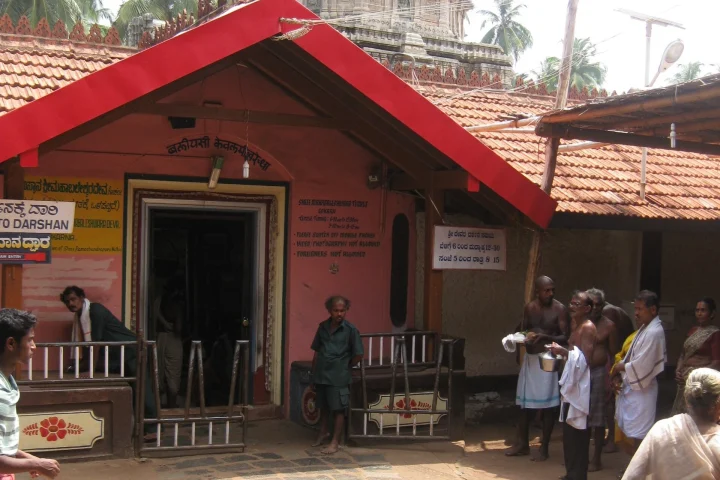
The Karnataka coast and the hills behind it hold some of the most loved temples in South India: Udupi’s Krishna, Kollur’s Mookambika, the Atmalinga of Gokarna, Lord Manjunatha of Dharmasthala and Lord Subrahmanya of Kukke, with the Sharada Peetham of Sringeri and Annapoorneshwari of Horanadu in the Malnad hills. Together they make up our Coastal Karnataka temples yatra.
The temples are a long way from Tamil Nadu, and we would rather tell you that plainly. By road the whole loop takes nine days, of which about four are mostly driving. Many pilgrims prefer to take a train or flight to Mangaluru and do the temple days by car from there; tell us if you want that and we will plan it with you.
The temples on this tour
Sringeri and Horanadu
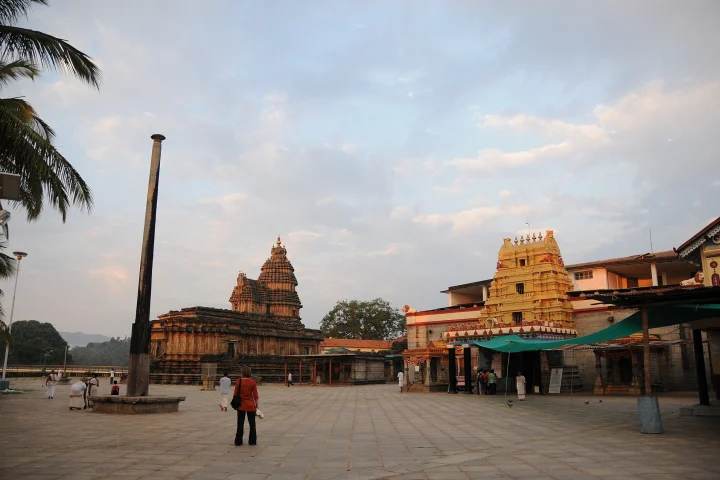
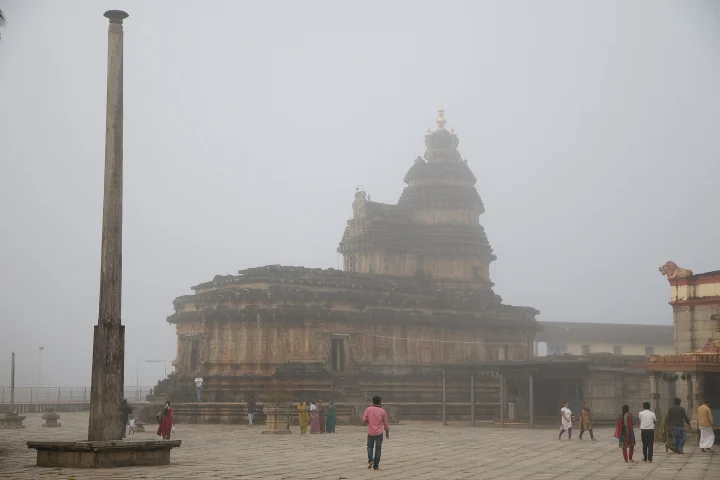
Sringeri on the Tunga river is home to the Sringeri Sharada Peetham, which tradition traces to Adi Shankaracharya. The Sharadamba Temple is dedicated to the goddess of learning, and the carved stone Vidyashankara Temple stands beside it. Nearby, Horanadu Annapoorneshwari Temple on the Bhadra river is known for feeding every pilgrim who comes.
Dharmasthala and Kukke
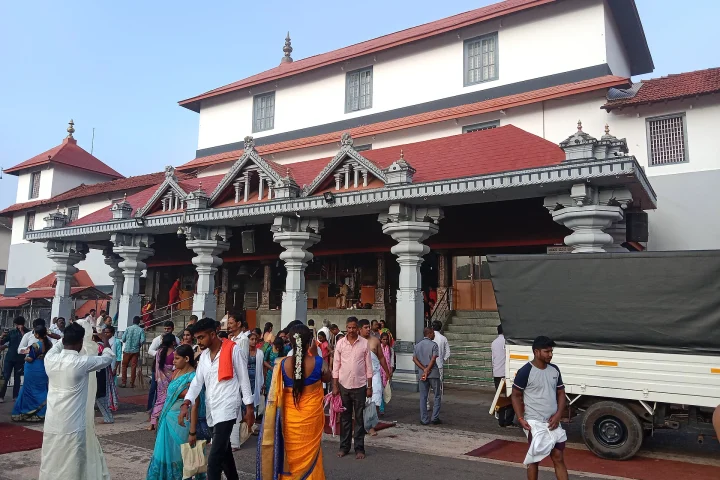
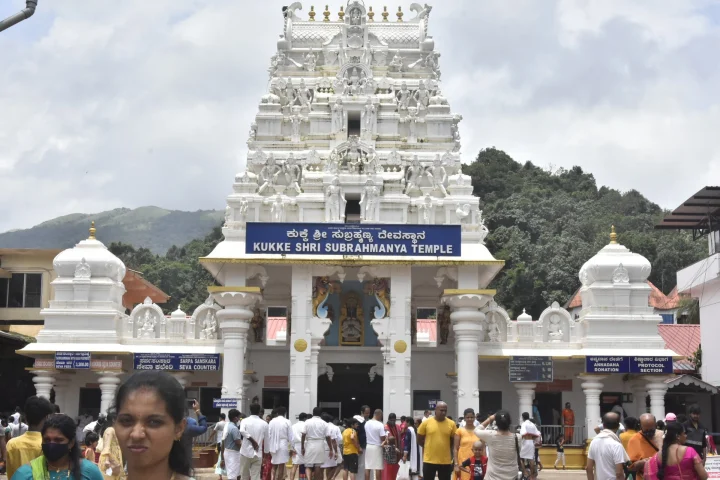
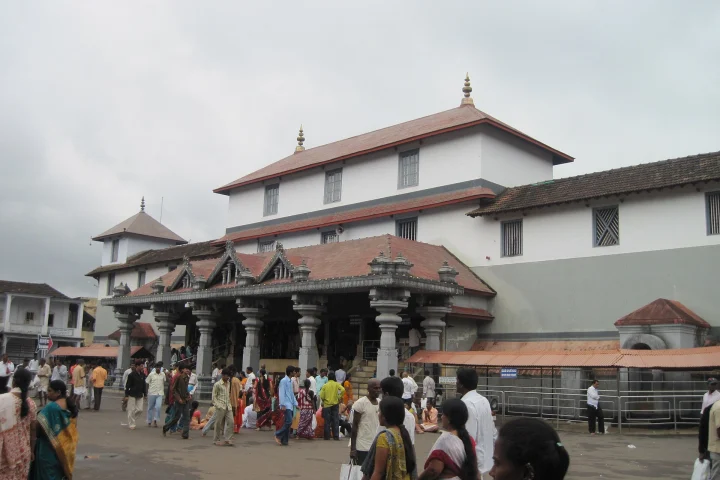
At Dharmasthala Lord Manjunatha (Shiva) is worshipped in a temple managed by a Jain family, with Vaishnava priests performing the rituals – a famous example of the region’s shared traditions. Kukke Subramanya in the forest below Kumara Parvatha is where many families come for Sarpa Samskara and other rites related to serpent dosha. Read more on our Dharmasthala town page.
Udupi and Kollur
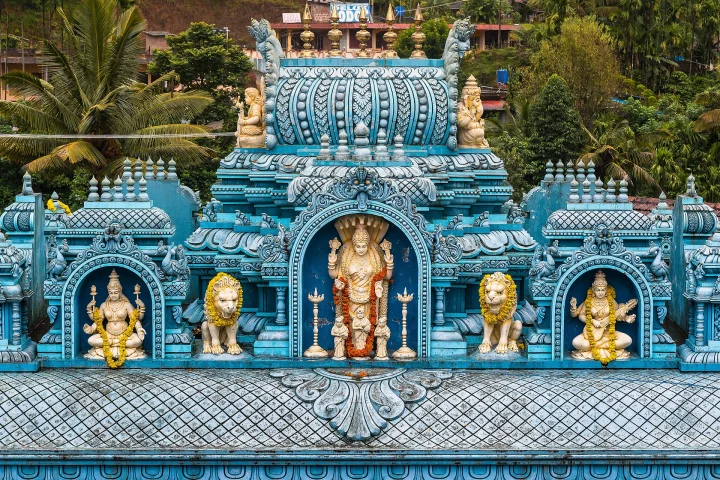
In Udupi, the image of Krishna installed by the philosopher Madhvacharya is seen through a small nine-holed window called the Kanakana Kindi. Worship is run in turn by eight mathas, and the handover, called Paryaya, happens every two years. Udupi Sri Krishna Matha is about two hours from Kollur Mookambika Temple, where the goddess is worshipped with a jyotirlinga in the sanctum, below the Kodachadri hills.
Murudeshwar and Gokarna
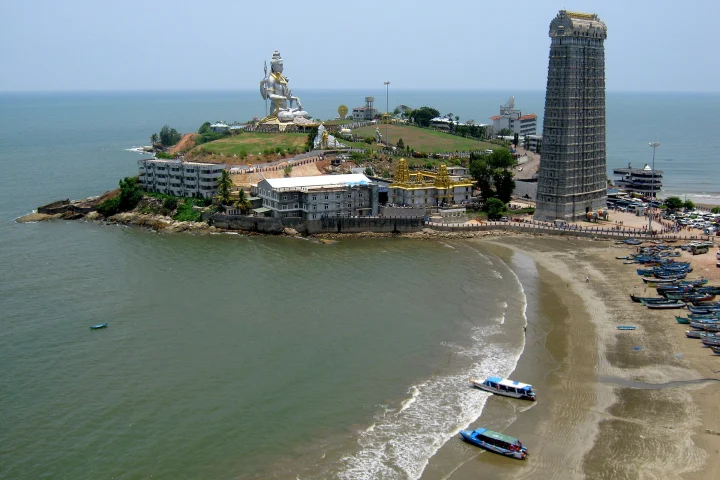
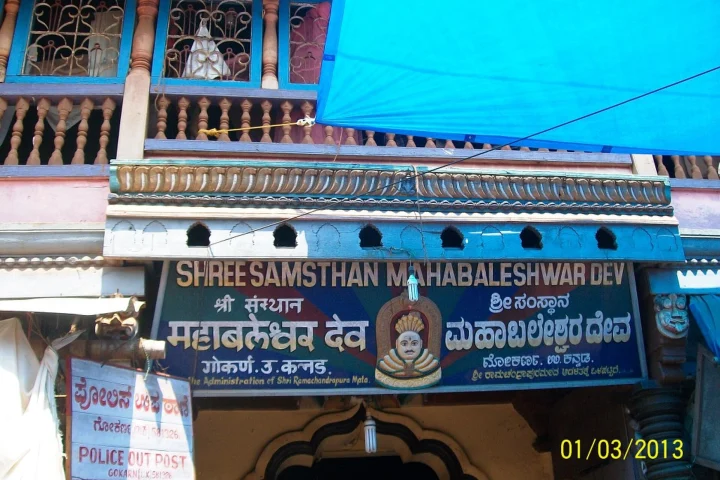
According to the Atmalinga legend, Ravana was carrying Shiva’s lingam to Lanka when Ganesha, disguised as a boy, set it down at Gokarna, where it stayed. The Mahabaleshwar Temple enshrines it. Murudeshwar, on a small headland by the sea, is linked to the same story and is known for its towering gopuram and one of the tallest Shiva statues in the world.
Timings and dress
- Most of these temples are open early in the morning, close for part of the afternoon and reopen in the evening, and hours vary from temple to temple. Timings change on festival days – check before you go.
- At Dharmasthala, Kukke and several other temples in the region, men are asked to remove their shirt and vest before darshan at the time of writing. Women usually wear a saree or churidar with a dupatta.
- Photography is generally not allowed inside the shrines.
- From June to September the coast and the ghats get very heavy monsoon rain; the hill roads can be slow. October to February is the most comfortable time.
- Navaratri (September–October) is the great festival at Kollur and Sringeri, and Maha Shivaratri at Gokarna and Murudeshwar; expect crowds.
Shorter options
If you have less time, fly or take the train to Mangaluru and do Days 2 to 6 from there in five days. You can also join this route with our Hampi temples tour, as Gokarna is about 300 km from Hampi. Read our coastal Karnataka temple trail guide for the best order and seasons, or start on the plan your trip page.
Frequently asked questions
How long is the drive from Trichy or Pondicherry to Udupi?
About 620–700 km depending on the route, which is 12 to 14 hours of real driving. That is why we break the journey at Bengaluru and go via the hill temples, and come back via Chitradurga and Krishnagiri.
Can we do this tour starting from Mangaluru?
Yes. Many pilgrims take a train or flight to Mangaluru and do the temples by car from there in about five days. Tell us your arrival details and we will plan it.
Do men have to remove their shirts?
At Dharmasthala, Kukke and several other temples in coastal Karnataka, men are asked to remove their shirt and vest before darshan at the time of writing. Carry a dhoti or veshti and an upper cloth to be comfortable.
What is the best season for this tour?
October to February. The monsoon from June to September brings very heavy rain to the coast and the ghats, and April–May is hot and humid on the coast.