Last updated:
This is one of our longest tours, and one of the most rewarding. It takes you from Pondicherry into the Nallamala forest at Ahobilam, where Narasimha is worshipped in nine forms, and then along the Tungabhadra to Alampur and Mantralayam. The drives are long, so we have kept two full days at Ahobilam and broken the return at Tirupati.
Ahobilam – the nine Narasimhas
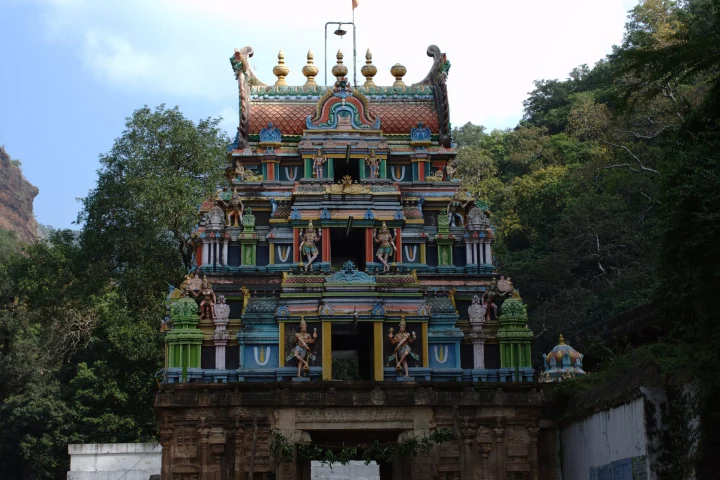
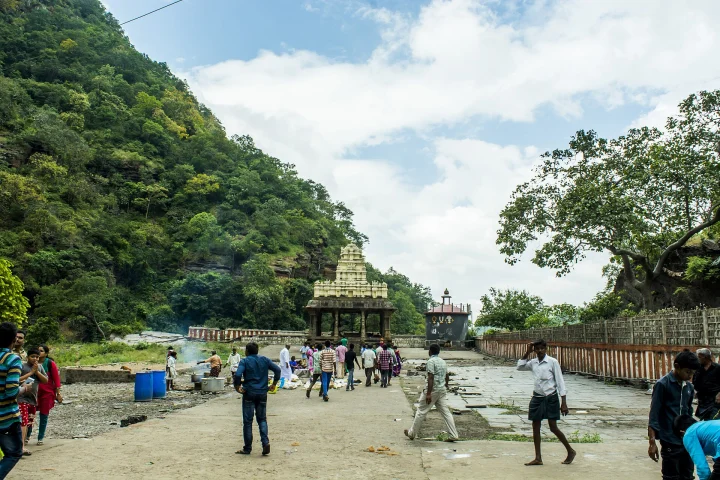
Ahobilam is a Divya Desam and the birthplace of the Ahobila Matha. By tradition the nine shrines are Ahobila, Krodakara (Varaha), Jwala, Malola, Karanja, Bhargava, Yogananda, Chatravata and Pavana Narasimha. Some are next to the road; others need a real forest walk.
Please be honest with yourself about the walking. Jwala Narasimha involves a steep climb over rocks and steps, slippery after rain, and Pavana Narasimha needs a hired local jeep over a rough forest track. Doli (palanquin) bearers are available for some shrines. Elderly pilgrims can still have a full and meaningful visit to the temples that are reachable by car. The Brahmotsavam in February–March is the biggest festival.
Mahanandi and Alampur
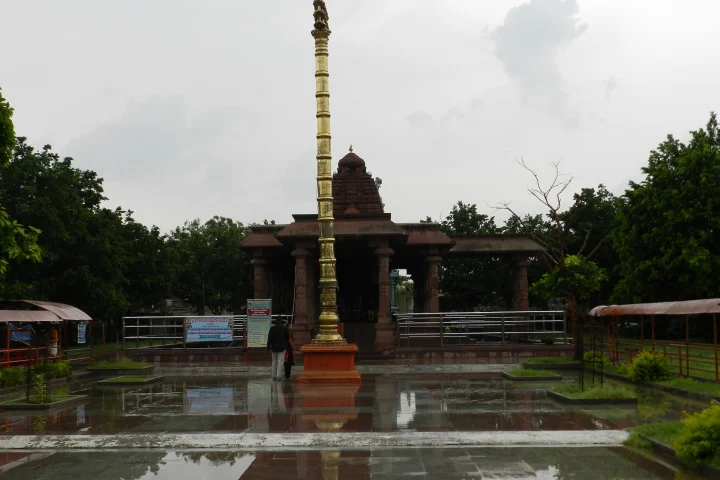
At Mahanandi, a Shiva temple whose original structure is credited to the Badami Chalukyas, spring water rises below the sanctum and flows through clear pools where pilgrims bathe. At the time of writing, bathing in the large inner pool is not allowed after 5 pm.
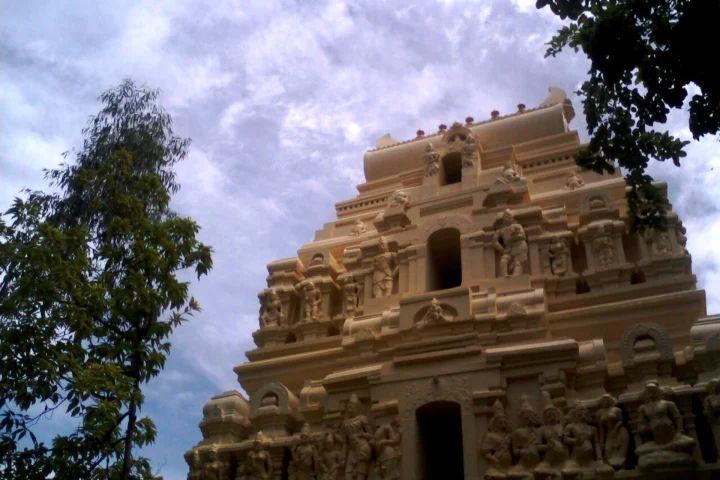
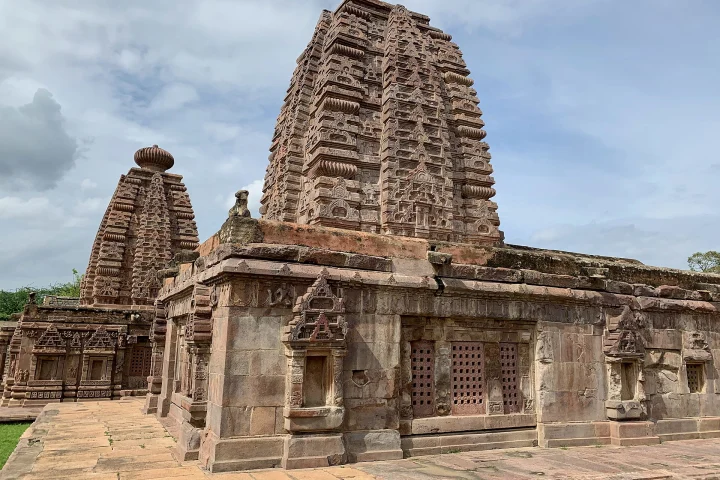
The Jogulamba Temple at Alampur, in Telangana, close to Kurnool, is one of the 18 Maha Shakti Peethas. The temple was rebuilt on its old site in 2005. Beside it stand the Nava Brahma temples, nine Shiva temples from the seventh and eighth centuries. See our Shakti Peethas of South India guide.
Mantralayam – a matha, not a temple
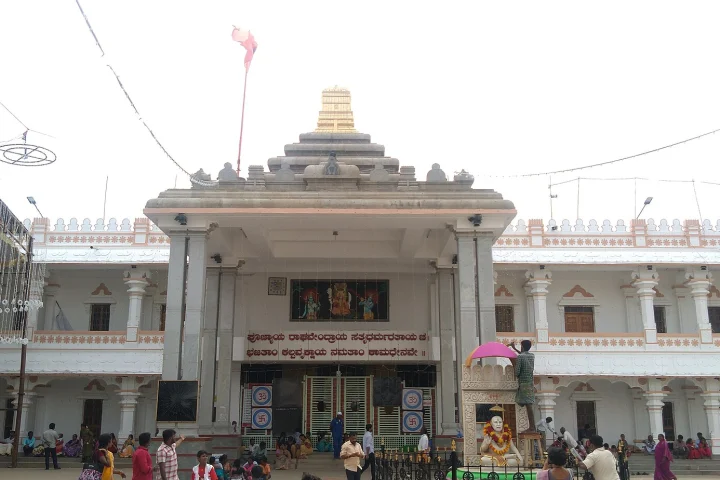
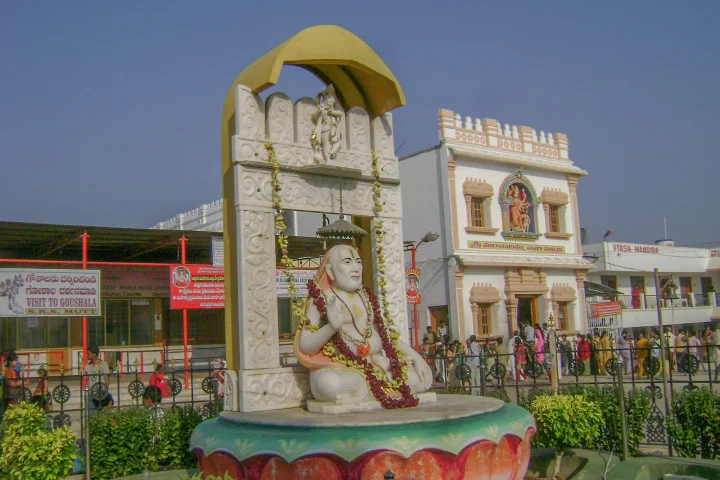
At Mantralayam, pilgrims come for the Brindavana of Sri Raghavendra Swamy, the Madhva saint who entered it in 1671. It is a matha (monastery) with the saint’s Brindavana at its heart, not a temple in the usual sense, and the atmosphere is one of quiet devotion. The yearly Aradhana, in August–September, draws very large crowds.
The Matha asks men to remove their shirt and vest and carry them in the darshan line, and women to wear Indian dress, preferably a saree. At the time of writing, Brindavana darshan is from 6 am to 2 pm and 4 to 9 pm.
Tips
- The best season is October to February. Summer at Ahobilam and Mantralayam is very hot, and heavy rain can close the forest paths.
- Carry water, a torch, a hat and good footwear for the forest shrines; footwear is left at each shrine.
- Wear traditional dress at all the temples, and follow the notices on phones and cameras; photography inside the shrines is generally not allowed.
- Timings at Ahobilam, Mahanandi and Alampur change on festival days – check before you go.
Shorter ways to do it
The road distances are long: Ahobilam is about 445 km from Pondicherry and about 560 km from Trichy, and Mantralayam about 630 km from Pondicherry. Many pilgrims take a train to Kurnool or Nandyal, or a flight to Hyderabad, and use our car from there; Kurnool is about 140 km from Ahobilam and about 90 km from Mantralayam. From Trichy, we add a day to reach the start. You can also combine this trip with our Srisailam Jyotirlinga tour. Ask us on the plan your trip page.
Frequently asked questions
Is the Ahobilam trek difficult?
Some of it, yes. Jwala Narasimha involves a steep, rocky climb with steps, and Pavana Narasimha is reached by a hired jeep over a rough forest track. Several shrines are close to the road, and doli bearers are available for some of the climbs.
Is Mantralayam a temple?
Mantralayam is a matha that holds the Brindavana of Sri Raghavendra Swamy. Pilgrims have darshan of the Brindavana and follow the Matha’s dress rules.
Can we start from Trichy?
Yes. Ahobilam is about 560 km from Trichy, so we add a day at the start, or you can take a train to Kurnool or Nandyal and join the car there.
Can elderly pilgrims do this tour?
Yes, with care. The road shrines, Mahanandi, Alampur and Mantralayam are easy to reach. Skip the forest shrines at Ahobilam or use a doli where available.