Last updated:
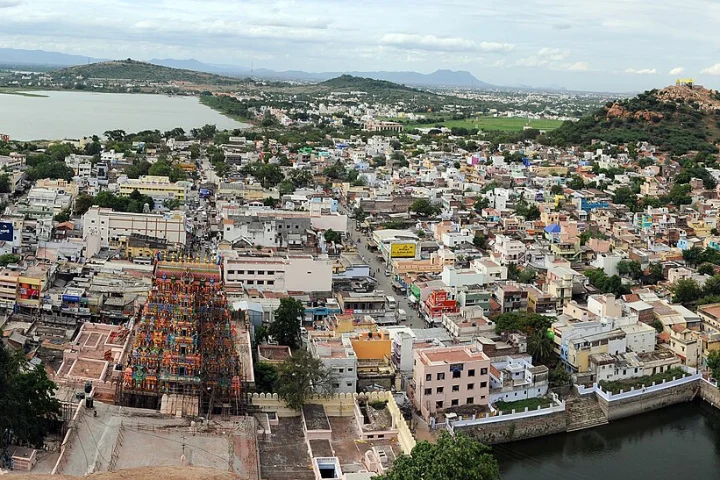
Madurai is one of the oldest continuously inhabited cities in South India, the capital of the Pandya kings and the seat of the Tamil Sangams of tradition. Its streets are laid out in squares around the Meenakshi Sundareswarar Temple, and the names of the streets – Chithirai, Aavani, Masi – follow the Tamil months in which festival processions pass along them.
For pilgrims, Madurai is more than one temple. Two of Lord Murugan’s six abodes are just outside the city, Alagar Koil is a short drive away, and Madurai is the natural stop on the way to Rameswaram, Tiruchendur and Kanyakumari.
On this page
Main temples
Meenakshi Sundareswarar Temple
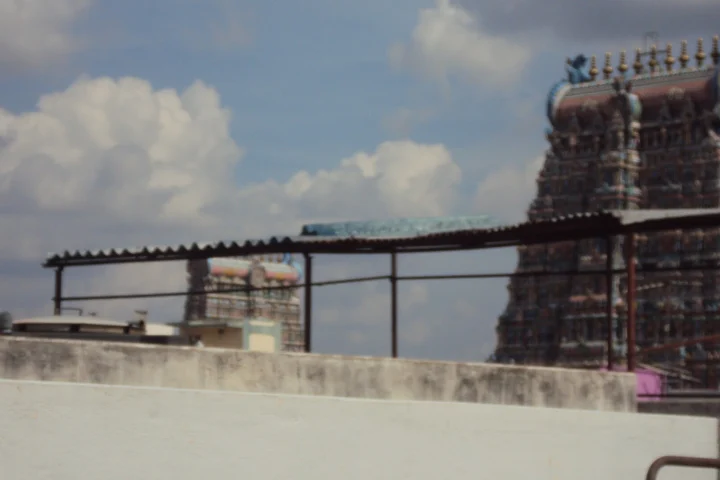
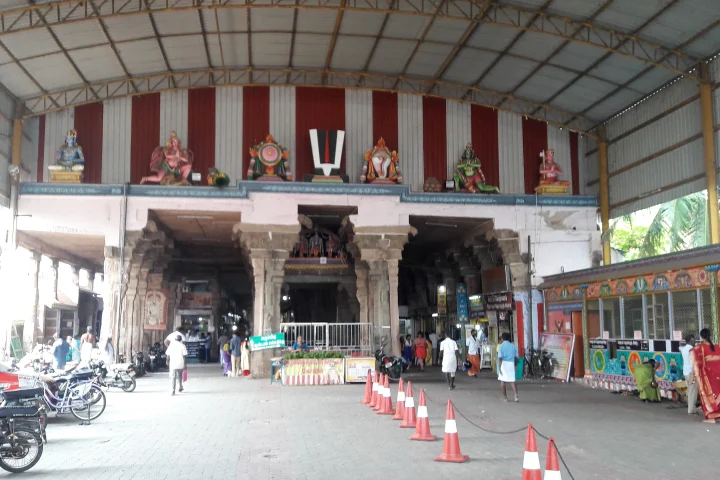
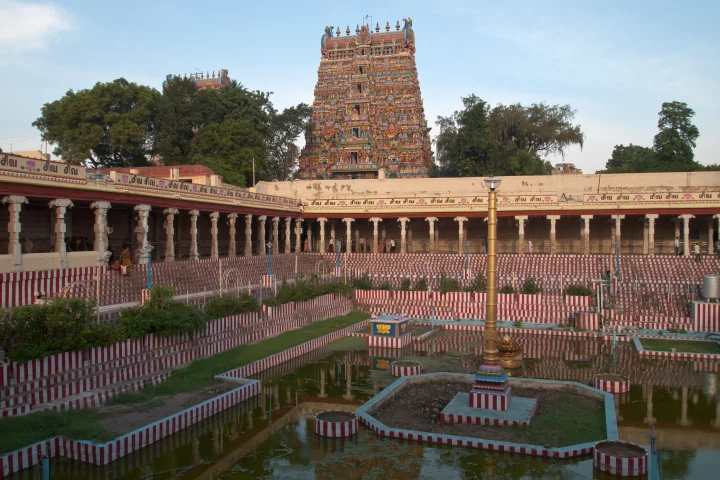
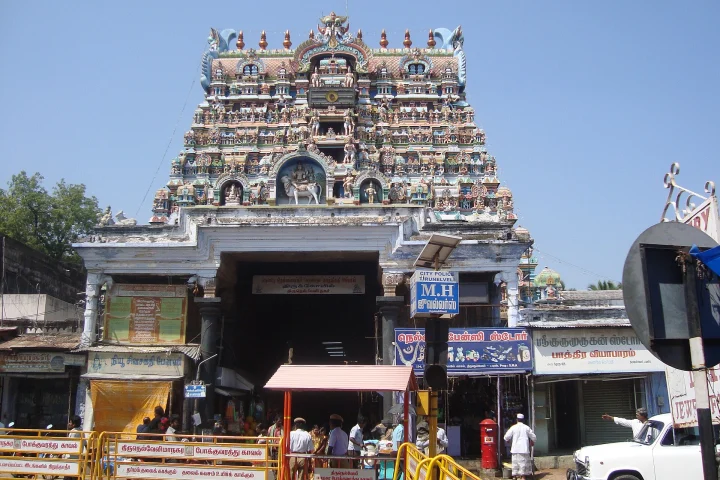
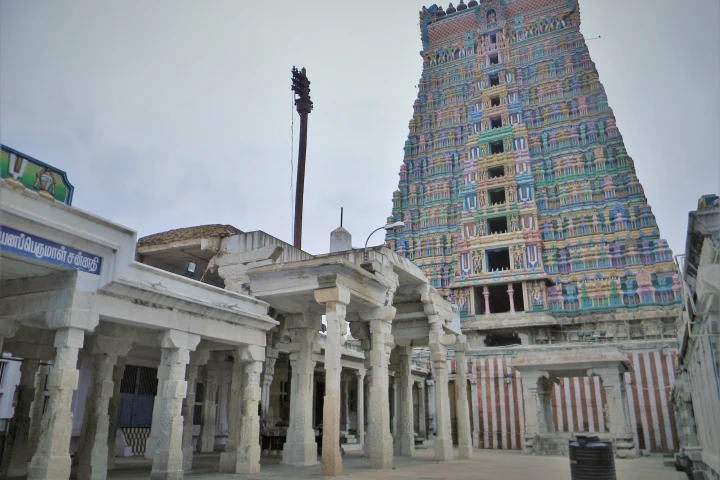
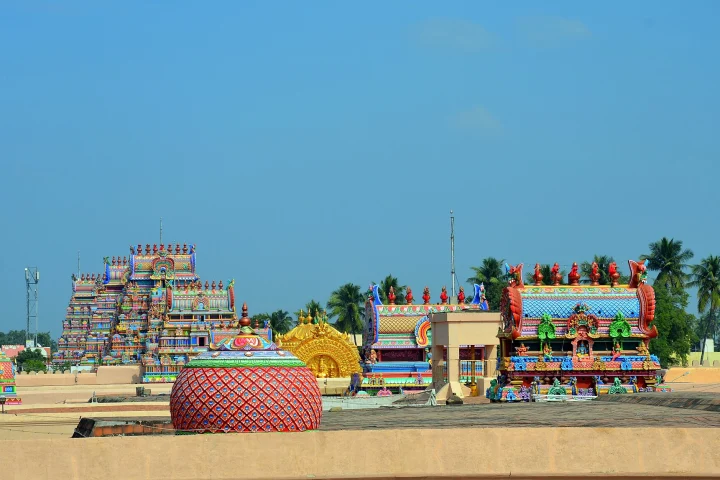
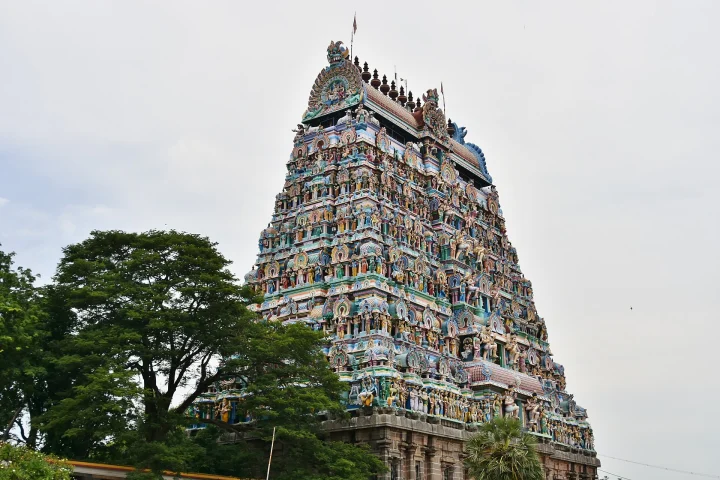
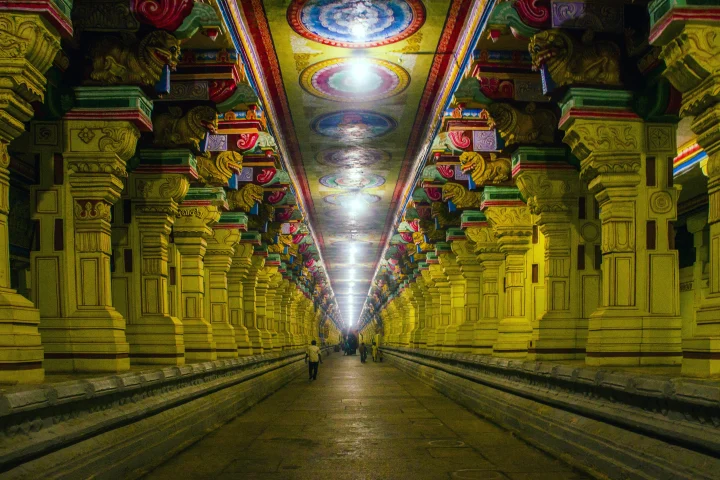
Goddess Meenakshi, holding a parrot, stands in her own shrine, and Lord Shiva is worshipped as Sundareswarar in the adjoining main shrine. By custom many devotees worship the Goddess first. The temple has fourteen gopurams, the tallest of them on the southern side, and its present form owes much to the Madurai Nayak rulers of the 16th and 17th centuries. Inside are the Golden Lotus (Potramarai) tank, the thousand-pillared hall and long corridors of carved pillars.
According to tradition, Meenakshi was born as the daughter of a Pandya king, ruled the kingdom, and married Shiva, who came to Madurai as Sundareswarar; Vishnu, as her brother, gave her away in marriage. Read our full page on the Meenakshi Amman Temple.
Thiruparankundram Murugan Temple
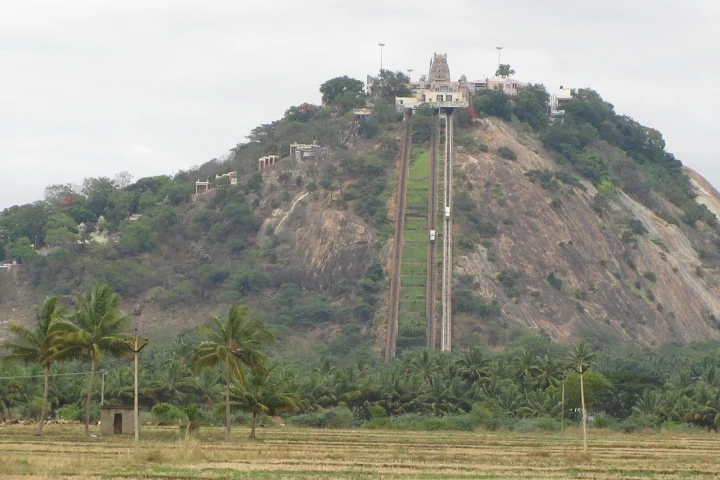
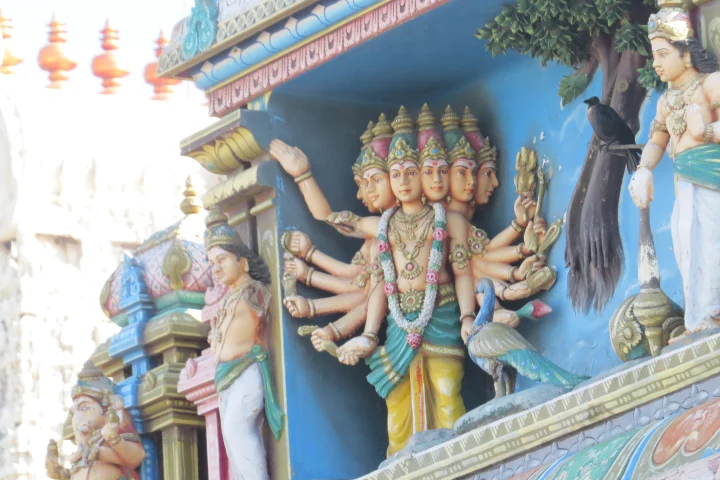
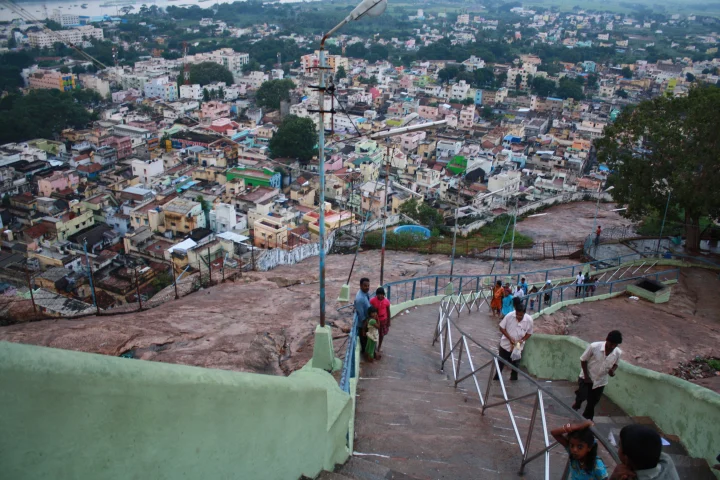
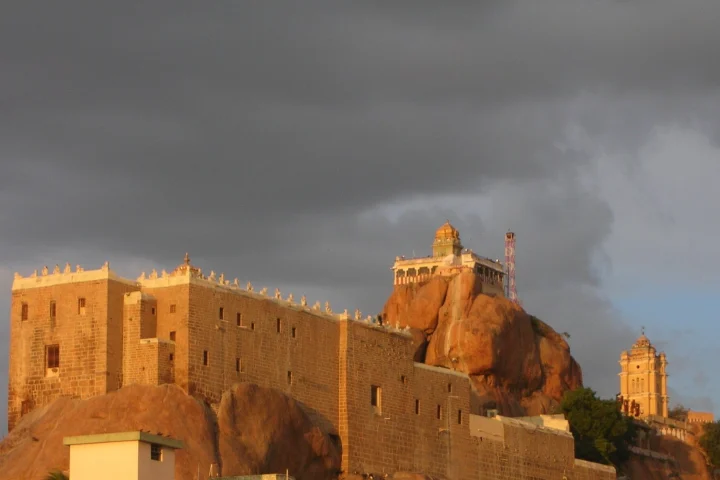
About 8 km south-west of the city, this rock-cut temple is the first of the Arupadai Veedu. According to tradition, Lord Murugan married Deivanai here. See the Thiruparankundram Murugan Temple page.
Alagar Koil and Pazhamudircholai
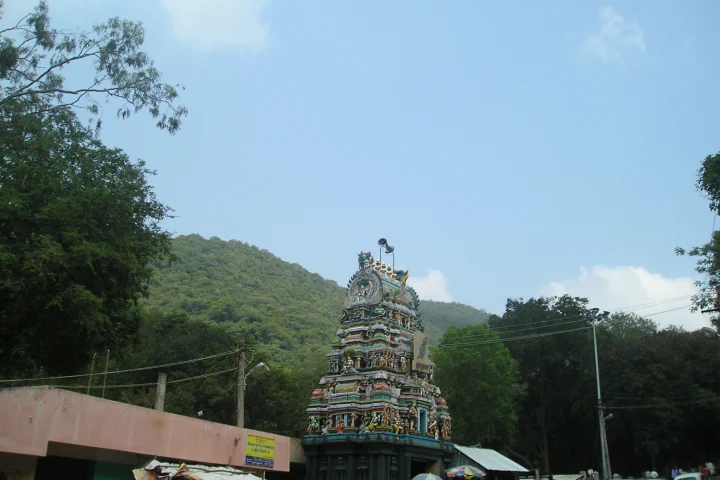
About 20 km north-east of Madurai, at the foot of the Alagar hills, Alagar Koil is a Divya Desam dedicated to Vishnu as Kallazhagar, the brother who travels to Madurai during the Chithirai festival. Higher up the same hill is Pazhamudircholai (Solaimalai), the sixth abode of Murugan, near the spring called Nupura Gangai. Both fit into one half-day.
Other temples in the city
- Koodal Azhagar Temple – a Divya Desam in the heart of the old city.
- Vandiyur Mariamman Teppakulam – a huge tank with a central mandapam, the venue of the float festival in the Tamil month of Thai.
- Thirumalai Nayak Palace – not a temple, but a fine example of the period that shaped the Meenakshi Temple.
Darshan tips
- Photography is not allowed inside the Meenakshi Temple. Phone rules in Tamil Nadu temples changed during 2026 – follow the notice at the gate, and use the deposit counters if phones are not allowed that day (check before you go).
- Paid special-darshan queues are available at the main shrines; confirm the current rate at the official counter.
- Early morning and late evening are calmer. The evening palliyarai (night procession) is a lovely ceremony to attend.
- Wear traditional or modest clothing; see our temple dress code guide.
Festivals
- Chithirai Thiruvizha (April–May): the coronation and celestial wedding of Meenakshi and Sundareswarar, the temple car festival, and Kallazhagar entering the Vaigai river.
- Float festival (Teppa Thiruvizha) at the Vandiyur Teppakulam in the Tamil month of Thai (January–February).
- Navaratri at the Meenakshi Temple (September–October).
- See our temple festivals calendar.
Where to stay
Madurai has hotels of every category, many within walking distance of the Meenakshi Temple’s outer streets and others near the railway junction. Staying close to the temple makes early-morning and evening darshan easy. We book a hotel of your choice on request.
Best time to visit
October to March is the most comfortable season. April to June is hot, though April–May brings the Chithirai festival, the city’s biggest event. Monsoon rain is usually moderate.
How to reach
From Trichy: about 130 km, around 2 hours 30 minutes on a good four-lane highway. Madurai can be a long day trip, but an overnight stay is better.
From Pondicherry: about 330 km, around 6 hours via Trichy. We usually break the journey at Trichy or Srirangam.
Madurai Junction and Madurai Airport connect the city to Chennai, Bengaluru and beyond. See our Madurai and Rameswaram temple tour or book a car with driver.
Frequently asked questions
How much time is needed at the Meenakshi Temple?
Allow 2 to 3 hours for darshan at both main shrines and a walk around the tank and halls; longer on weekends and festival days.
Are mobile phones allowed inside the Meenakshi Temple?
Photography is not allowed inside. Phone rules changed during 2026 – at the time of writing phones switched off may be allowed, but follow the notice at the gate. Deposit counters are available near the entrance towers.
Which Arupadai Veedu temples are near Madurai?
Thiruparankundram (about 8 km) and Pazhamudircholai on the Alagar hills (about 20 km) are both close to the city.
Can Madurai and Rameswaram be done together?
Yes. Rameswaram is about 175 km from Madurai. A two- or three-day trip covers both comfortably.