Last updated:
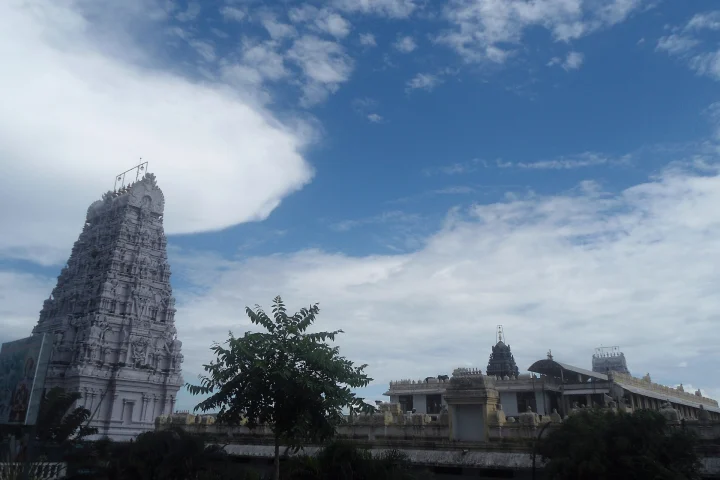
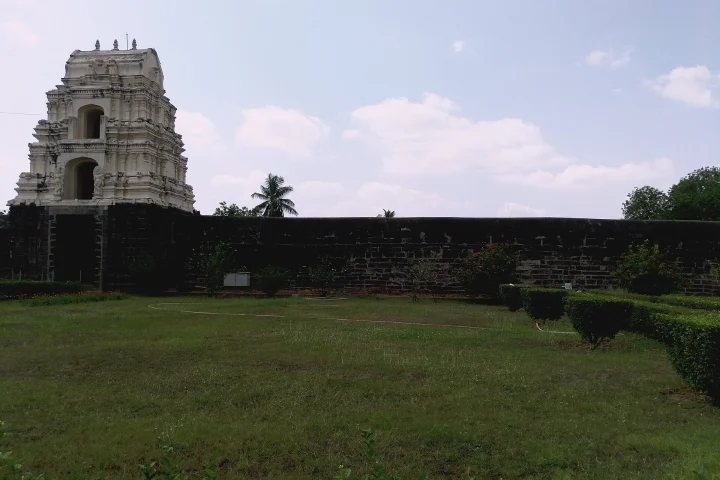
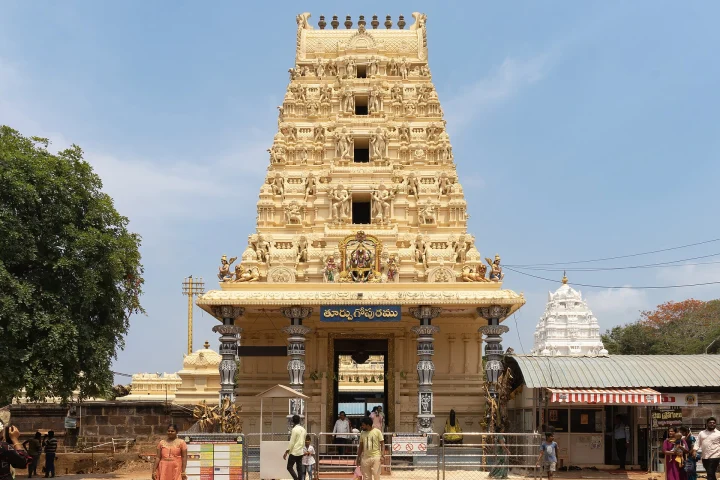
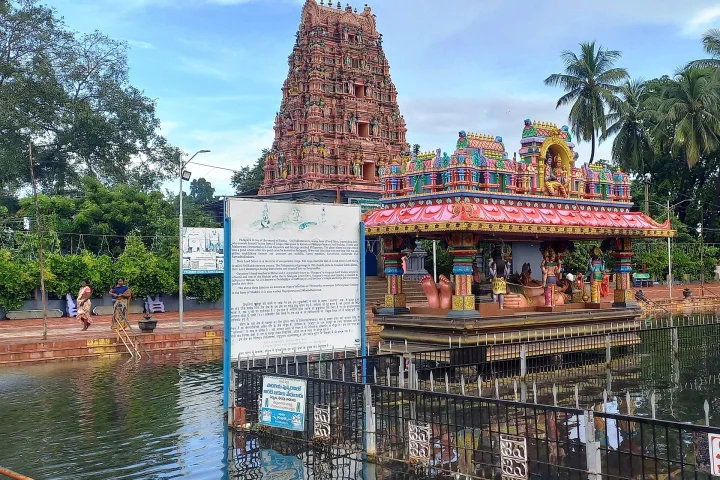
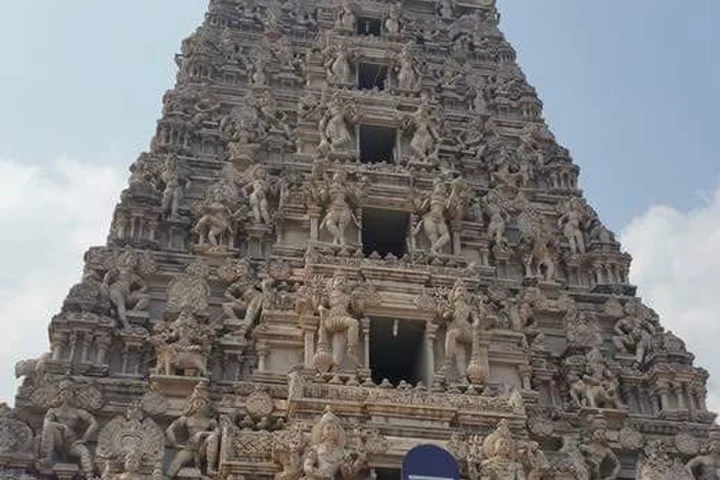
Close to Samalkot (Samarlakota) in Kakinada district stands the Kumararama Bhimeswara Swamy Temple, one of the five Pancharama Kshetras. It is one of the best-preserved early temples of the Godavari region. It is a centrally protected monument, and its grey stone walls, quiet courtyards and temple tank give it a calm, timeless feel.
For many pilgrims, Kumararama is where the Pancharama story feels closest – the temple’s name honours Kumaraswamy, Kartikeya himself.
On this page
Deity and legend
According to tradition, Kartikeya (Kumara) shattered the lingam worn by the demon Tarakasura, and its five pieces were installed at the five Pancharamas. At Samalkot, the lingam is believed to have been installed by Kumaraswamy himself – hence Kumararama.
The Lord is Kumara Bhimeswara Swamy, and the Goddess is Bala Tripura Sundari. The tall lingam rises from the ground floor and passes through the ceiling into the upper storey, where the upper part is worshipped.
History and architecture
- Built by the Eastern Chalukya king Chalukya Bhima I; construction is dated to about 892–922 CE, and the god’s name Bhimeswara comes from the king.
- A two-storey sanctum: the lingam is seen at ground level, and devotees climb to the upper floor to see its top.
- Its style is closely related to the Bhimeswara temple at Draksharama, from the same Eastern Chalukya tradition.
- A pushkarini (temple tank) on the east side, with a small pillared mantapam beside it.
Darshan tips
- Do not miss the upper floor – the climb is short, and it is the temple’s most distinctive feature.
- Take a slow walk around the outer corridor to see the old stonework; it is usually quieter than the shrine itself.
- Kumararama fits neatly between Draksharama (about 40 km) and Annavaram on the same day.
A suggested plan
From a base in Rajahmundry, a good eastern day is: Draksharama early in the morning, Kumararama at Samalkot by late morning, and Annavaram on Ratnagiri hill in the afternoon or evening, before returning to Rajahmundry. This covers two Pancharamas and one of Andhra’s most popular Vishnu temples in one comfortable day.
If you are short of time, Draksharama and Kumararama alone make an easy half-day. The western pair, Ksheerarama and Somarama, then make the second day.
What to carry
- Traditional clothes for all the temples of the day.
- Small change for offerings and the footwear stand.
- Water and a hat – the stone courtyards get hot by midday.
- Comfortable footwear for the outer corridors (removed before entering the temple).
Good to know
Because the temple is a protected monument, some parts of the old structure may be closed for conservation from time to time. Follow the instructions of the temple staff and the monument staff, and do not touch or climb on the carvings.
Visiting with elders
The ground-floor darshan is easy to reach, but the upper floor is reached by steps that may be steep for some elders. Those who prefer can have darshan below and rest in the shade of the corridor while the family goes up. The temple is usually calmer than the bigger town temples, which makes it a pleasant stop for older travellers. Visit early on summer days, before the stone courtyards heat up.
How to reach
From Rajahmundry: about 50 km, roughly 1 hour 15 minutes by road.
From Kakinada: about 20 km. The temple is about 1 km from Samalkot town, and Samalkot Junction is a major railway station.
From Pondicherry: about 830 km, roughly 15–16 hours of driving – plan two days with a night halt at Vijayawada.
From Trichy: about 1,000 km, around 18–19 hours of driving over two days. Many pilgrims take a train to Samalkot or Rajahmundry, or fly to Rajahmundry, and use our car from there.
Combine it with
- Draksharama, its sister temple of the same period.
- Annavaram Satyanarayana Swamy on Ratnagiri hill.
- The rest of the circuit on our Pancharama Kshetras tour, based in Rajahmundry.
Frequently asked questions
Why is it called Kumararama?
By tradition the lingam here was installed by Kumaraswamy (Kartikeya), who broke Tarakasura’s lingam into the five Pancharama pieces.
Who built the Samalkot temple?
The Eastern Chalukya king Chalukya Bhima I, around 892–922 CE. The name Bhimeswara comes from him.
What is special about the sanctum?
It is two storeys high. The tall lingam rises from the ground floor through the ceiling, and its top is worshipped from the upper floor.
How do I reach Kumararama by train?
Samalkot Junction is about 1 km from the temple, and Rajahmundry and Kakinada are also nearby.