Last updated:
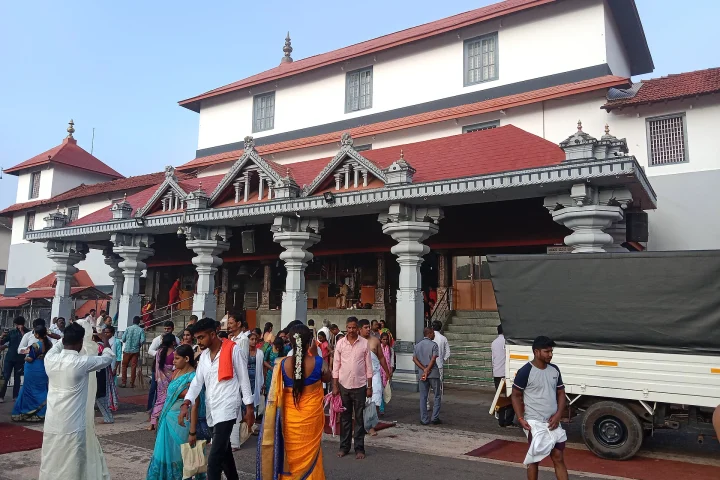
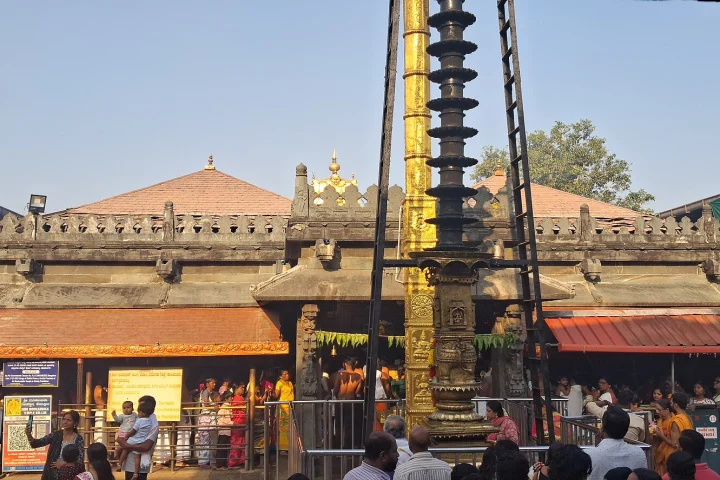
Dharmasthala is a temple town in Dakshina Kannada, set among areca and coconut groves on the bank of the Netravati river at the foot of the Western Ghats. Its Sri Manjunatha Swamy Temple is one of the most visited Shiva temples in Karnataka – and a rare example of faiths working together: the priests follow the Madhva Vaishnava tradition, while the temple is administered by the Heggade family, who are Jains.
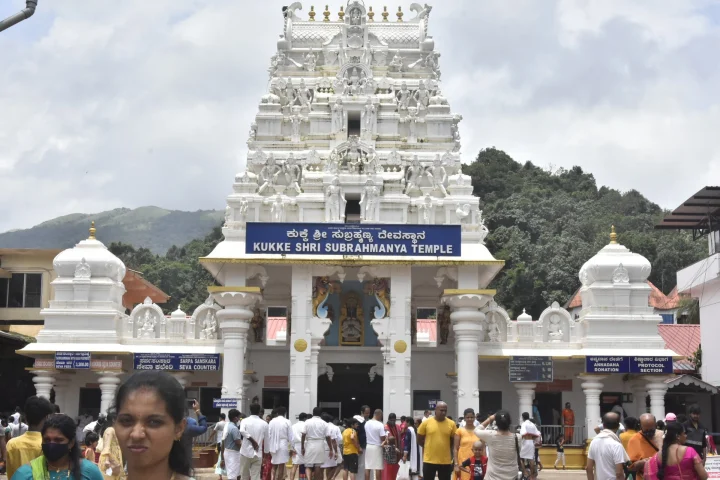
About 55 km away, on the Kumaradhara river, is Kukke Subramanya, the most important shrine of serpent worship in South India. The two are usually visited together on our Coastal Karnataka temples yatra.
On this page
Main temples
Sri Manjunatha Swamy Temple
The presiding deity is Lord Shiva as Manjunatha, worshipped as a lingam. Alongside him, the temple honours the Dharma Daivas – guardian spirits of justice – and Annappa, a local protector deity. Pilgrims traditionally bathe in the Netravati at the snana ghat before darshan. The hereditary head of the temple, the Dharmadhikari, is known for his public role in settling disputes, and many devotees still come to take vows before the Lord. See the Dharmasthala Manjunatha Temple page.
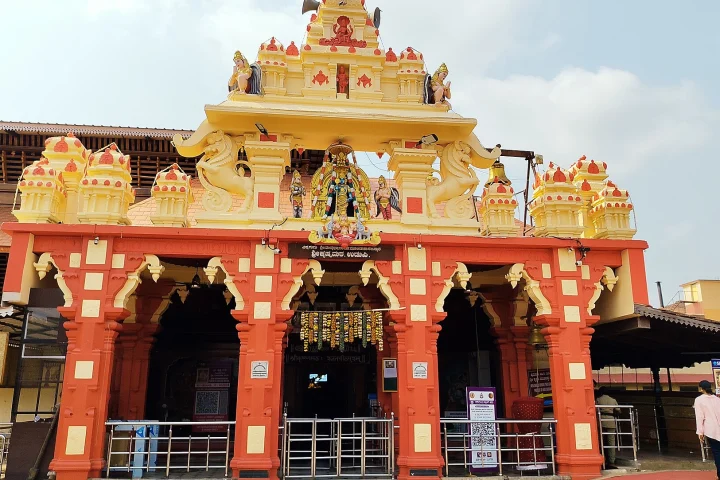
Kukke Subramanya Temple
Lord Subramanya (Murugan, Kartikeya) is worshipped here, and according to tradition the great serpent Vasuki took refuge with him at this spot. Devotees seeking relief from serpent-related afflictions (sarpa dosha) perform rituals such as Sarpa Samskara and Ashlesha Bali, which are booked with the temple. See the Kukke Subramanya Temple page.
History and legend in brief
According to tradition, about eight centuries ago the Dharma Daivas appeared to a Jain chieftain, Birmanna Pergade, and his wife, Ammu Ballalthi, and asked that they be honoured here and that the family dedicate itself to charity. A Shiva lingam was later installed, believed to have been brought from Kadri near Mangaluru, and worship of Manjunatha grew around it. The Heggade family has administered the temple ever since.
The four forms of charity – food, medicine, education and fearlessness (protection) – remain the temple’s ideals, and Dharmasthala runs large free kitchens, schools and hospitals.
Darshan tips
- Men are usually asked to remove shirts and vests before entering, and traditional dress is expected. At the time of writing, check before you go.
- Weekends, holidays and festival days bring long queues; a weekday morning is calmest.
- The annadana meal is served to all pilgrims at set times in large dining halls – an experience in itself.
- Kukke’s special rituals often require an early start or an overnight stay; ask us to plan around the booking you make with the temple.
- Keep an hour for the Bahubali statue on Ratnagiri hill and the museums near the temple.
Festivals
- Lakshadeepotsava (Karthika, November–December) – the whole town is lit with lamps, alongside religious and literary gatherings.
- Maha Shivaratri (February–March) – many devotees walk to Dharmasthala on padayatra.
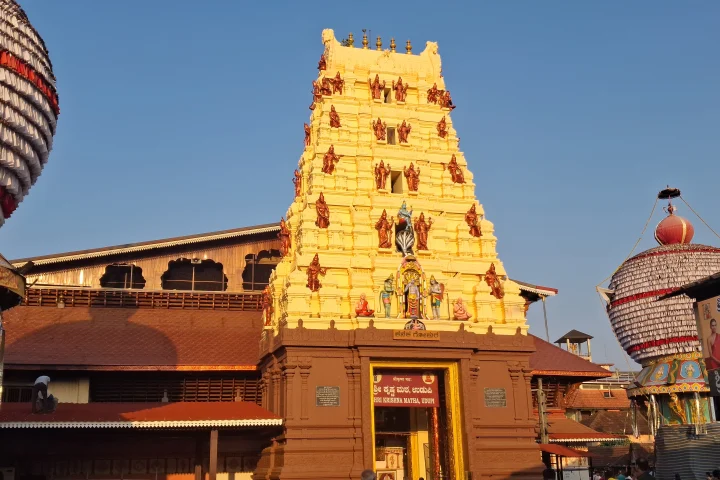
- Champa Shashti (November–December) at Kukke Subramanya, its main festival with the chariot procession.
Combine Dharmasthala with
Dharmasthala and Kukke Subramanya are usually done together, with a night at either place. From here, the road climbs the Ghats to Horanadu (about 100 km) and Sringeri, or runs down to the coast at Mangaluru and Udupi. In Mangaluru itself, the Kadri Manjunatha temple – linked by tradition with Dharmasthala’s lingam – is a good stop on the way in or out.
If you have only two days from Mangaluru, a practical plan is Dharmasthala on day 1 (arrive by afternoon, darshan and annadana) and Kukke Subramanya on day 2, returning to Mangaluru by evening.
Where to stay
The temple runs guest houses and choultries for pilgrims, and there are private lodges in and around the town. Kukke Subramanya also has temple and private accommodation. For more comfort, some pilgrims stay in Mangaluru and drive in. We book a hotel of your choice on request.
Best time to visit
October to February is the most comfortable time. The monsoon (June–September) brings very heavy rain to the Ghats, and some ghat roads can be slow or closed for repairs; temples stay open. March to May is hot and humid.
How to reach
From Trichy: about 600 km, around 12 hours, usually via Bengaluru and Hassan and down the Western Ghats. Split it over two days, or take a train or flight to Mangaluru.
From Pondicherry: about 650 km, around 13 hours, also via Bengaluru.
Mangaluru, about 70 km away, has the nearest major railway station and airport. See our Coastal Karnataka temples tour, or book a car with driver for your own plan.
Frequently asked questions
How far is Kukke Subramanya from Dharmasthala?
About 55 km, around 1½ hours by road.
Is food free at Dharmasthala?
Yes. The temple serves free meals (annadana) to all pilgrims at set times every day.
Is there a dress code at Dharmasthala?
Traditional dress is expected, and men are usually asked to remove shirts and vests before entering. Follow the notices at the temple.
Which is the nearest airport to Dharmasthala?
Mangaluru International Airport, about 70 km away.