Between the Arabian Sea and the forested Western Ghats, the Tulu and Kannada coast of Karnataka holds a remarkable chain of temples. In a week you can see Krishna at Udupi, the Goddess at Kollur, the Atmalinga at Gokarna, Lord Manjunatha at Dharmasthala, Lord Subrahmanya at Kukke, and, up in the hills, Sharadamba at Sringeri and Annapoorneshwari at Horanadu. Together they form our Coastal Karnataka temples yatra.
This guide explains what each temple is known for, how to string them together, and when to go. It is written for pilgrims coming from Tamil Nadu, for whom the trail is a long but rewarding journey.
On this page
The temples at a glance
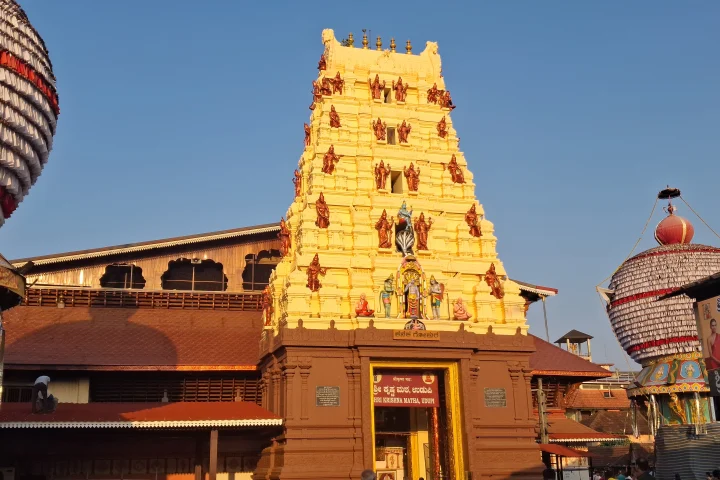
Udupi Sri Krishna Matha
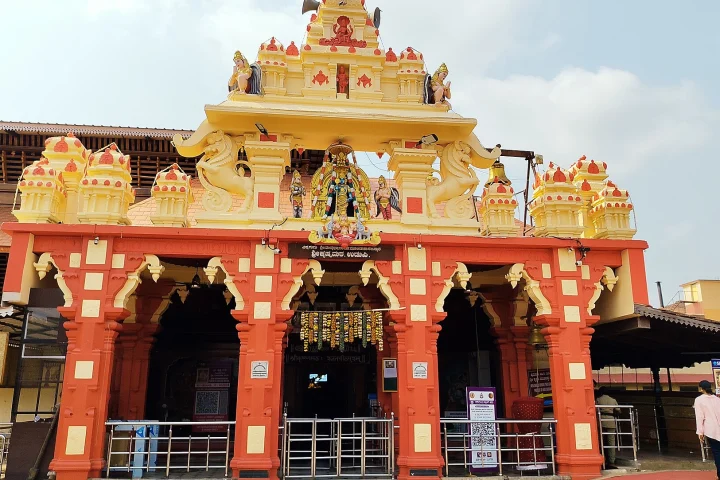
In Udupi, the image of Bala Krishna installed by the 13th-century philosopher Madhvacharya is seen through the Kanakana Kindi, a small window linked with the saint-poet Kanakadasa. Worship at the Sri Krishna Matha is managed by eight mathas in rotation, and the handover, called Paryaya, takes place every two years in January. Krishna Janmashtami is a great festival here.
Kollur Mookambika
About 75 km north, Kollur Mookambika Temple sits by the Souparnika river below the Kodachadri hills. The Goddess is worshipped with a jyotirlinga in the sanctum, and the temple is closely associated with Adi Shankaracharya. Navaratri is the main festival, when many families from Kerala bring children for Vidyarambham, their first letters.
Murudeshwar and Gokarna
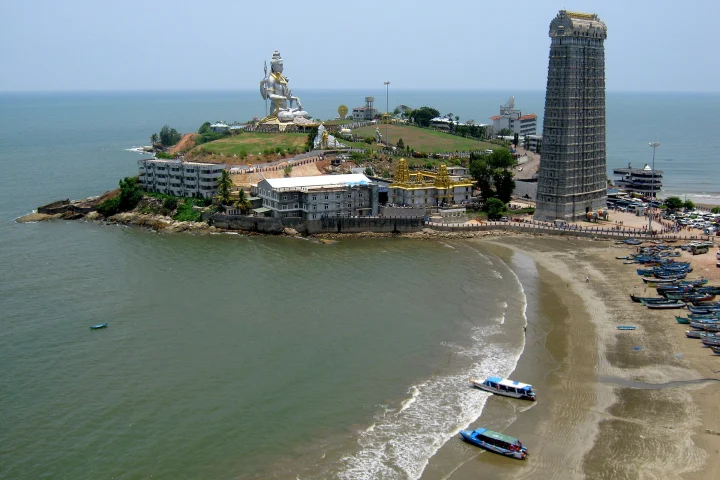
According to the Atmalinga legend, Ganesha tricked Ravana into setting Shiva’s lingam down at Gokarna, where it is enshrined in the Mahabaleshwar Temple. Murudeshwar, on a headland by the sea, is linked to the same story and is known for its tall gopuram and huge Shiva statue. Maha Shivaratri is the great day at both.
Dharmasthala and Kukke Subramanya
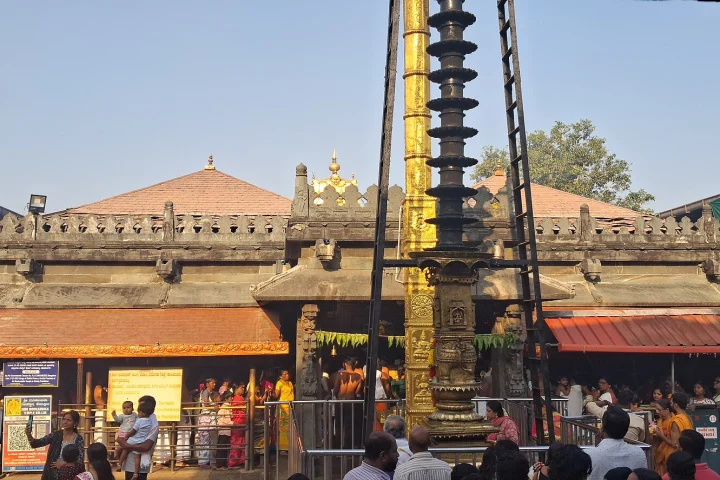
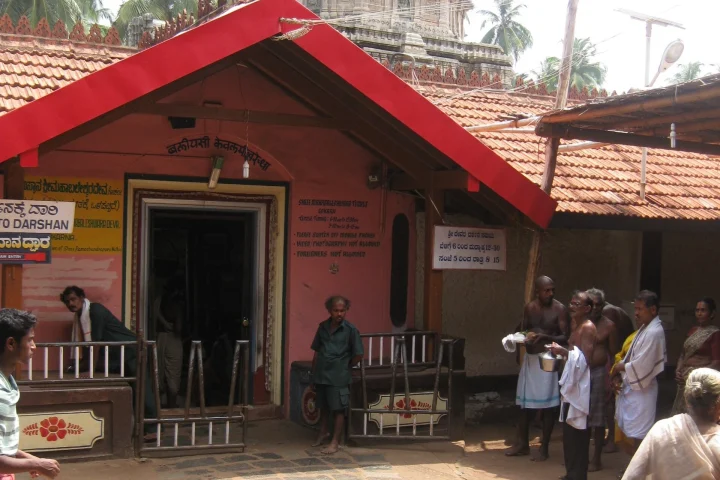
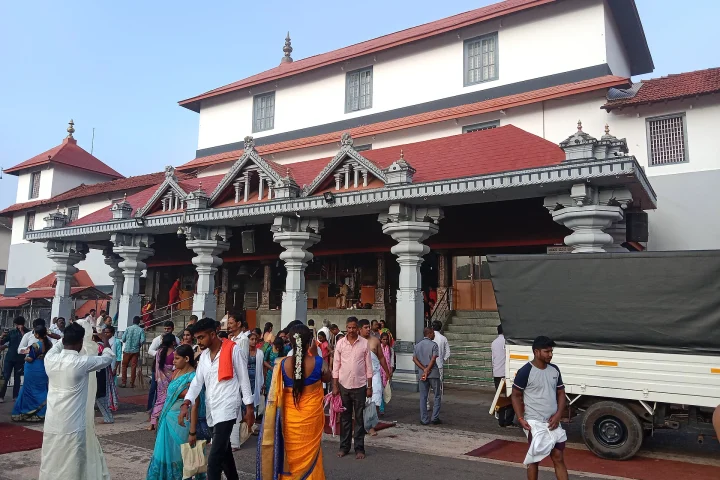
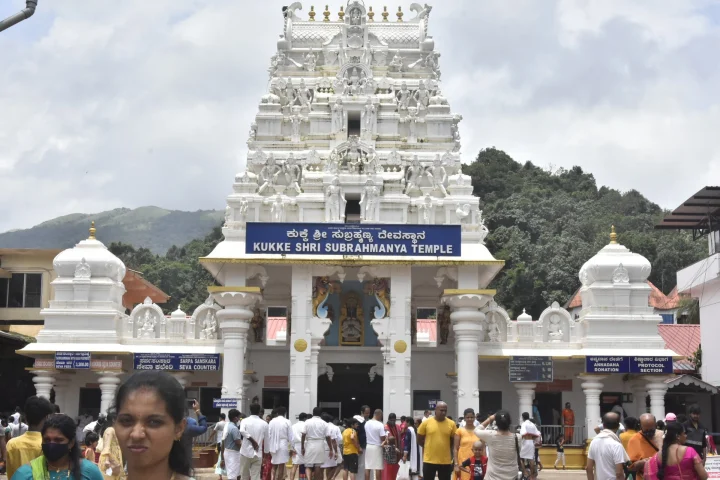
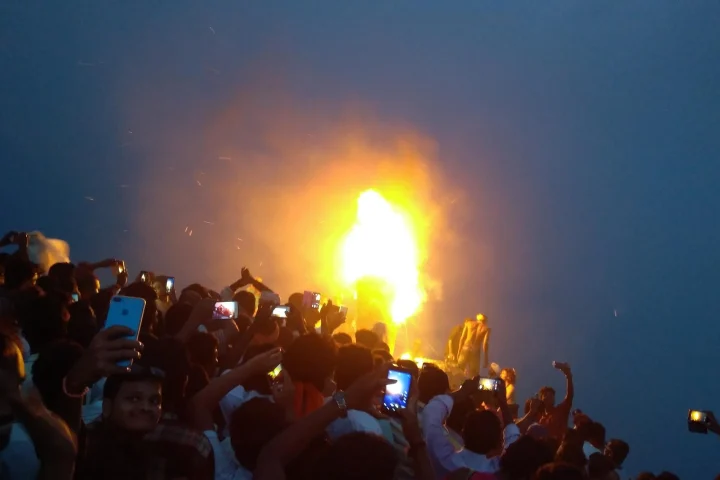
Inland, Dharmasthala on the Netravati is the shrine of Lord Manjunatha (Shiva). Unusually, it is managed by a Jain family, the Heggades, while Vaishnava priests perform the worship, and it is famous for feeding every visitor. Its Lakshadeepotsava (lamp festival) is held around November–December. Kukke Subramanya, about 55 km away in the forest by the Kumaradhara river, is the temple of Lord Subrahmanya as lord of serpents, where families perform the Sarpa Samskara and Ashlesha Bali rites. Its main festival is Champa Shashti.
Sringeri and Horanadu
Up in the Malnad hills, Sringeri on the Tunga river is the seat of the Sringeri Sharada Peetham, which tradition traces to Adi Shankaracharya. The Sharadamba Temple and the carved Vidyashankara Temple stand side by side. Horanadu, about an hour away on the Bhadra river, is the temple of Goddess Annapoorneshwari, known for offering a meal to every pilgrim.
The best order
The temples fall into two groups: the hill temples (Sringeri, Horanadu, Dharmasthala, Kukke) and the coast temples (Udupi, Kollur, Murudeshwar, Gokarna). Coming from Tamil Nadu via Bengaluru, it works well to enter through the hills and finish on the coast:
- Sringeri → Horanadu (about 42 km) → Dharmasthala (about 95 km over the ghats)
- Dharmasthala → Kukke Subramanya (about 55 km)
- Kukke → Udupi (about 160 km)
- Udupi → Kollur (about 72 km) → Murudeshwar (about 60 km) → Gokarna (about 77 km)
- If you arrive in Mangaluru by train or air, start at Dharmasthala or Udupi instead; each is about 60–75 km from Mangaluru.
How long it takes
From Mangaluru, the eight temples need about five unhurried days. From Tamil Nadu by road it is a much bigger journey: Udupi is about 620–700 km from Trichy or Pondicherry, and Gokarna over 800 km, which is 12 hours or more of real driving each way. That is why our Coastal Karnataka temples tour takes nine days by road, with nights at Bengaluru on the way out and at Chitradurga and Krishnagiri on the way back. Many pilgrims prefer to take a train or flight to Mangaluru and do the temple days by car.
When to go
- October to February is the best season: the monsoon is over, the hills are green and the coast is pleasant.
- June to September brings the south-west monsoon, with very heavy rain on the coast and in the ghats. Hill roads to Sringeri, Horanadu and Kukke can be slow, and landslides sometimes close them.
- March to May is hot and humid on the coast, though the hill temples stay milder.
- Navaratri (September–October) at Kollur and Sringeri, Maha Shivaratri (February–March) at Gokarna and Murudeshwar, and the Paryaya at Udupi in January of alternate years bring big crowds. See our best time for temple tours guide.
Dress and customs
- At Dharmasthala, Kukke and several other temples in the region, men are asked to remove their shirt and vest before darshan at the time of writing. Carry a dhoti and an upper cloth.
- Women usually wear a saree, or a churidar with a dupatta.
- Photography is not allowed inside the shrines.
- Many of these temples serve free meals (prasada bhojana) to pilgrims; join the line respectfully and do not waste food.
- Timings vary from temple to temple and on festival days. Most open early and close for part of the afternoon – check before you go.
- For general advice, see our temple dress code guide.
Stays and food
The temple towns on this trail are small, and rooms can run short on weekends and festival days. Udupi and Mangaluru have the widest choice of hotels; Dharmasthala, Kukke, Sringeri and Kollur have temple-run guest houses as well as private lodges, and Gokarna and Murudeshwar have simple hotels near the sea. Book ahead from October to January and for Navaratri.
Food is one of the pleasures of the region. Many of the temples serve a simple free meal to pilgrims at midday, and Udupi has given its name to a whole style of vegetarian cooking that is now found across India. Pure vegetarian meals are easy to find in every town on the route.
Add Hampi
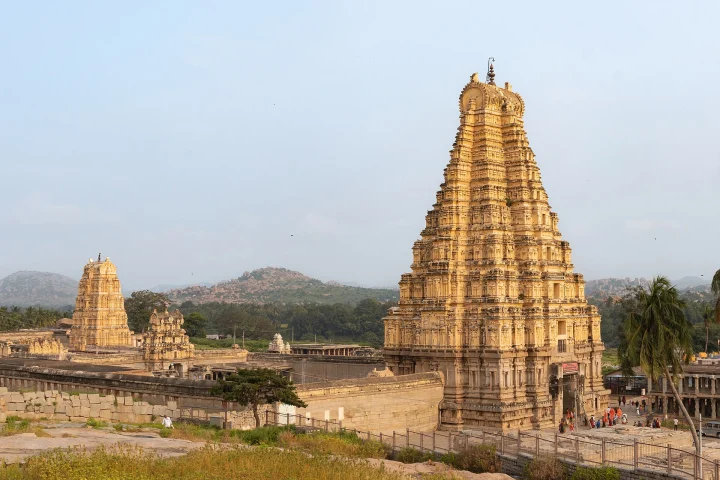
Gokarna is about 300 km from Hampi, the old Vijayanagara capital, so a longer Karnataka yatra can end there; see our Hampi temples tour. To plan your own route, start on plan your trip.
Frequently asked questions
Which temples are on the coastal Karnataka temple trail?
The main ones are Udupi Sri Krishna Matha, Kollur Mookambika, Murudeshwar, Gokarna Mahabaleshwar, Dharmasthala Manjunatha and Kukke Subramanya, often with Sringeri Sharadamba and Horanadu Annapoorneshwari in the hills.
How many days do I need?
About five days from Mangaluru. From Trichy or Pondicherry by road, allow about nine days, as the journey each way is very long.
What is the best time to visit coastal Karnataka temples?
October to February. The monsoon from June to September brings very heavy rain to the coast and the ghats.
Do men have to remove their shirts at these temples?
At Dharmasthala, Kukke and several other temples, men are asked to remove their shirt and vest before darshan at the time of writing. Rules vary, so follow the boards at each temple.
What is the nearest airport for the coastal temples?
Mangaluru, which also has a major railway station. Udupi, Kundapura, Murdeshwar and Gokarna Road have stations on the Konkan Railway line.