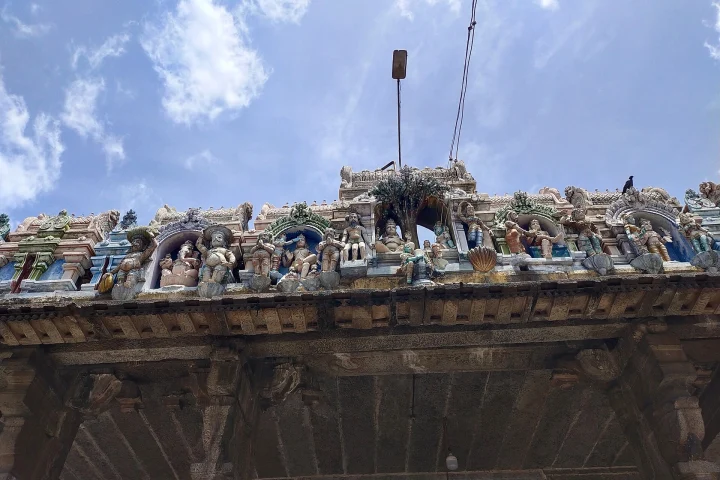
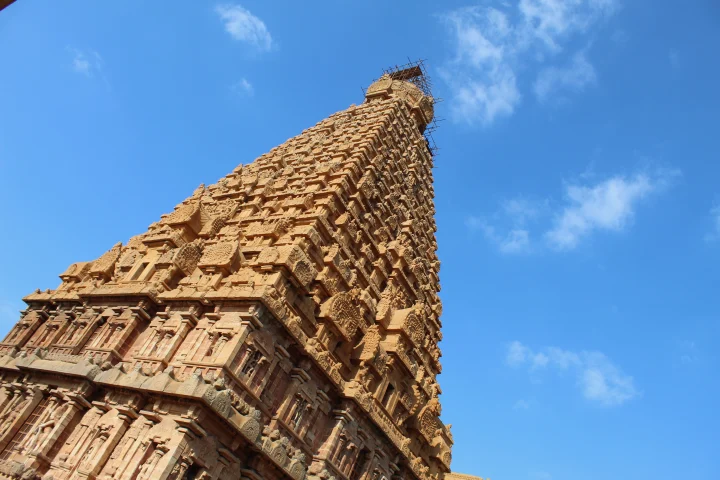
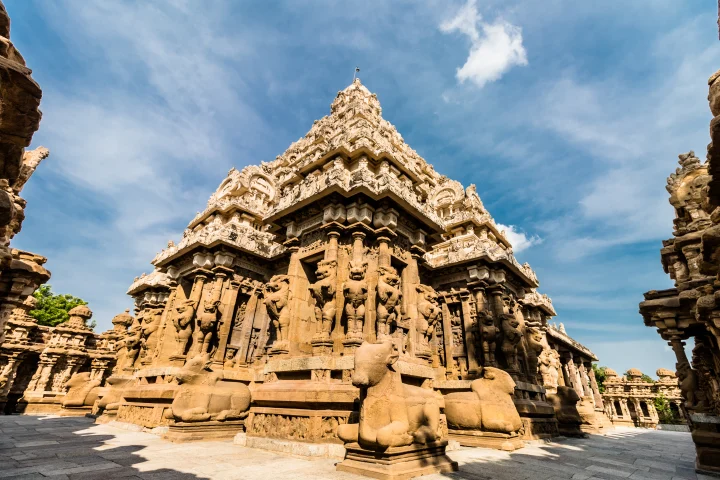
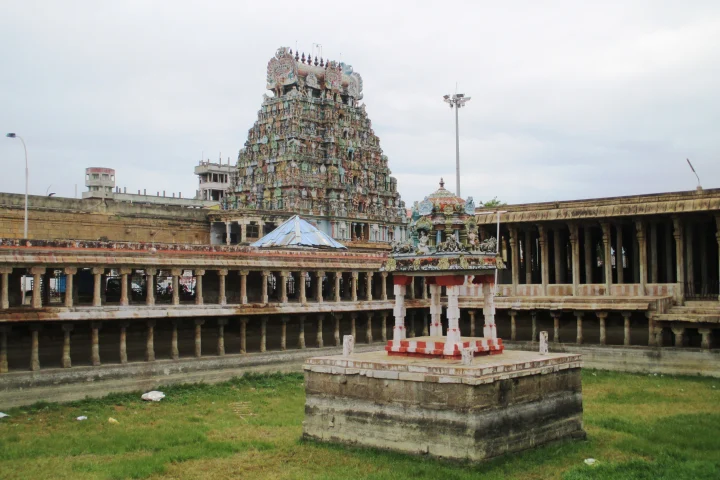
Indian thought has long described the physical world as made of five elements, the pancha bhoota: earth, water, fire, air and space (akasha). In the Shaiva tradition of South India, five great temples are each linked with one of these elements, and Shiva is worshipped in each as the element itself. Together they are called the Pancha Bhoota Sthalams – the five element shrines.
Four of the five are in Tamil Nadu and one is in southern Andhra Pradesh, all within a few hours’ drive of Pondicherry or Trichy. This guide explains what makes each temple special, how the elements are expressed, and how pilgrims usually plan the journey. For a ready itinerary, see our Pancha Bhoota Sthalam tour, and for a short overview, the Pancha Bhoota circuit page.
On this page
- The five temples at a glance
- Earth: Ekambareswarar, Kanchipuram
- Water: Jambukeswarar, Thiruvanaikoil
- Fire: Arunachaleswarar, Tiruvannamalai
- Air: Srikalahasti
- Space: Nataraja, Chidambaram
- Is there a correct order?
- Distances and a sample route
- Tips for the pilgrimage
- Part of a living tradition
- Plan with us
- Frequently asked questions
The five temples at a glance
- Earth (Prithvi) – Ekambareswarar Temple, Kanchipuram
- Water (Appu or Jala) – Jambukeswarar Temple, Thiruvanaikoil, Trichy
- Fire (Agni) – Arunachaleswarar Temple, Tiruvannamalai
- Air (Vayu) – Srikalahasteeswara Temple, Srikalahasti, Andhra Pradesh
- Space (Akasha) – Nataraja Temple, Chidambaram
Earth: Ekambareswarar, Kanchipuram
According to tradition, Goddess Parvati made a lingam out of sand under a mango tree on the banks of the Vegavathi river and worshipped Shiva here; when a flood threatened it, she embraced the lingam to protect it. The lingam in the sanctum is therefore regarded as a Prithvi lingam, a lingam of earth. The temple’s sacred mango tree, said to bear fruit of different tastes on its four branches, is still venerated within the complex.
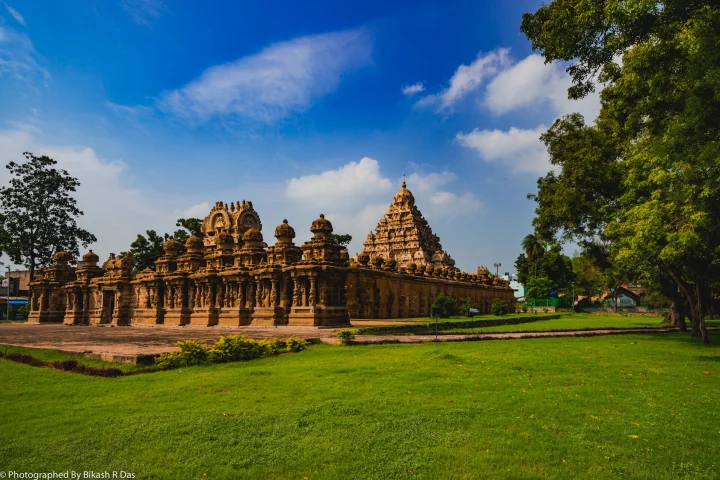
The Ekambareswarar Temple is one of the largest in Kanchipuram, with a tall southern gopuram and long pillared corridors. Combine it with the nearby Kamakshi Amman and Varadharaja Perumal temples on our Kanchipuram day tour.
Water: Jambukeswarar, Thiruvanaikoil
On the island of Srirangam, a short walk from the Ranganathaswamy Temple, the Jambukeswarar Temple at Thiruvanaikoil represents water. Its sanctum is low, and according to tradition a spring keeps water seeping up around the lingam. The temple’s name comes from a legend of an elephant (aanai) that worshipped Shiva here, along with a spider – a story it shares, in a different form, with Srikalahasti.
Goddess Akilandeswari has a major shrine of her own. At the noon pooja a priest, dressed as the Goddess, performs worship to Shiva, reflecting the tradition that she worshipped him here. Thiruvanaikoil is part of our Srirangam–Trichy temples day tour.
Fire: Arunachaleswarar, Tiruvannamalai
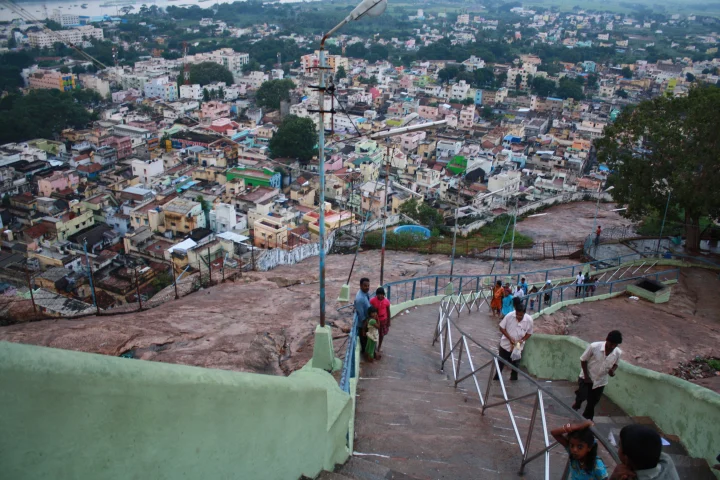
At Tiruvannamalai, the element is fire. According to the Puranic story, Brahma and Vishnu argued over who was greater, and Shiva appeared between them as an endless column of fire whose top and bottom neither could find. The hill of Arunachala is regarded as that fire in the form of a mountain.
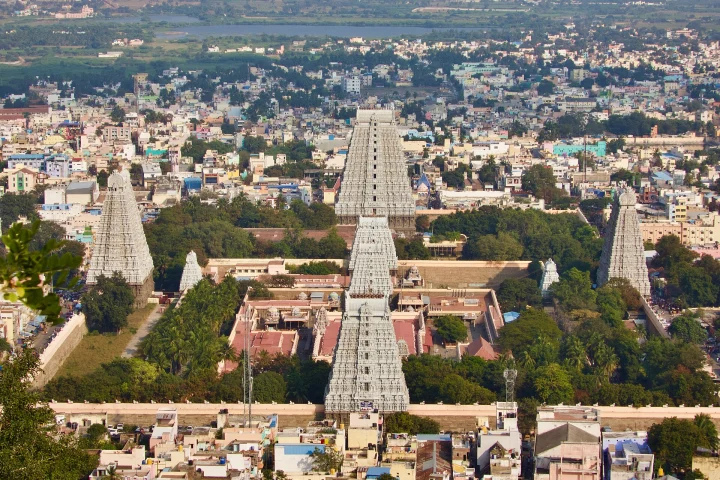
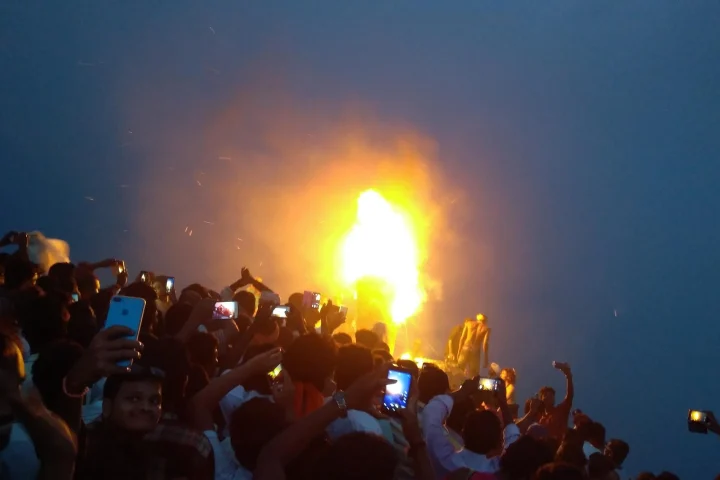
The Arunachaleswarar Temple sits at the foot of the hill and is one of the largest temple complexes in India. Each year during Karthigai Deepam (November–December), a great flame is lit on the summit. Pilgrims also walk the 14 km Girivalam around the hill – see our Girivalam guide.
Air: Srikalahasti
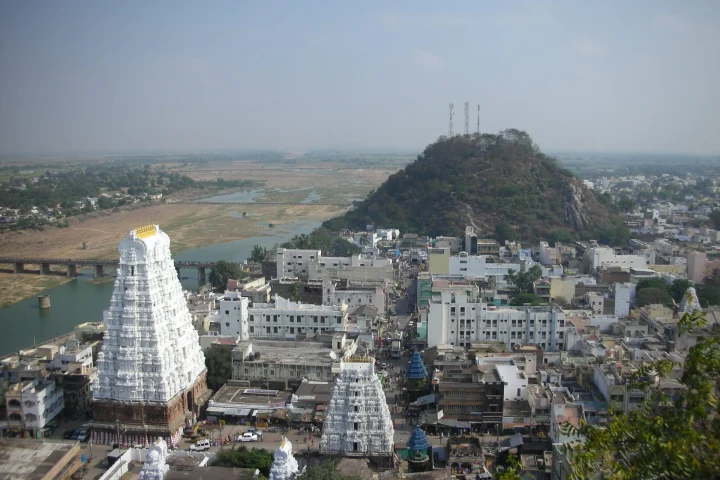
The Srikalahasteeswara Temple stands beside the Swarnamukhi river, about 40 km from Tirupati. Its name joins three devotees from legend: a spider (sri), a snake (kala) and an elephant (hasti), each of which worshipped Shiva here. Devotees point out that a lamp in the sanctum flickers as if in a breeze, which they take as a sign of Vayu, the air element.
The temple is also linked with Kannappa, the hunter whose devotion is celebrated in Tamil and Telugu tradition, and is widely visited for the Rahu-Ketu pooja. It is often paired with Tirumala – see our Tirupati–Srikalahasti tour.
Space: Nataraja, Chidambaram
At Chidambaram, Shiva is worshipped as Nataraja, the cosmic dancer, and the element is space. Beside the Nataraja image in the Chit Sabha is the “Chidambara Rahasyam” – the secret of Chidambaram. When the curtain is drawn back, devotees see strings of golden leaves before what appears to be empty space, symbolising Shiva as formless akasha.
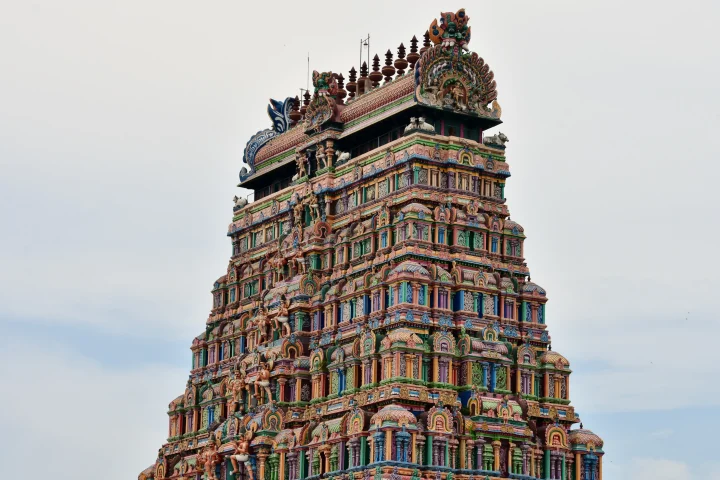
The Nataraja Temple is known for its golden-roofed hall and for gopurams carved with the 108 karanas (dance poses) of classical dance. It is administered by the hereditary Dikshitar priests. Its great festivals are Arudra Darshan in Margazhi (December–January) and Aani Thirumanjanam (June–July).
Is there a correct order?
There is no single order that all pilgrims follow. Some families visit the five over several trips, others in one journey. What matters most is reaching each temple when it is open – most Tamil Nadu temples close from roughly 12:30 pm to 4 pm – and keeping the drives reasonable.
Distances and a sample route
Distances are approximate road kilometres and drive times vary with traffic and roadworks.
- From Pondicherry: Chidambaram about 70 km; Tiruvannamalai about 110 km; Kanchipuram about 120 km; Srikalahasti about 245 km; Thiruvanaikoil about 200 km.
- From Trichy: Thiruvanaikoil is in town; Chidambaram about 145 km; Tiruvannamalai about 180 km; Kanchipuram about 270 km; Srikalahasti about 405 km.
- A comfortable loop from Pondicherry takes four days: Kanchipuram and Srikalahasti, then Tiruvannamalai, then Chidambaram, ending at Thiruvanaikoil in Trichy.
Tips for the pilgrimage
- Dress traditionally. At Chidambaram, men may be asked to remove shirts for darshan in the inner area. See our temple dress code guide.
- Many temples do not allow smartphones inside; keep them in the car.
- Check the festivals calendar – Karthigai Deepam and Arudra Darshan are magnificent but crowded.
- Starting in Trichy? Reverse the route, beginning at Thiruvanaikoil.
Part of a living tradition
All five temples are praised in the Thevaram hymns of the Tamil Shaiva saints – Appar, Sambandar and Sundarar – and are counted among the Paadal Petra Sthalams, the temples sung by them. That is why pilgrims from all over Tamil Nadu feel a special bond with them, even with Srikalahasti across the state border. Daily worship continues in each, and every temple has its own annual Brahmotsavam and festivals, often with chariot processions through the streets.
The idea of the elements also helps pilgrims reflect. Many devotees say that visiting all five is a reminder that the divine is present in everything around us: the ground we stand on, the water we drink, the fire that cooks our food, the air we breathe and the space that holds it all.
Plan with us
Call or WhatsApp +91 96265 65138 (24 hours) or use our contact page, and we will plan the five temples around your dates.
Frequently asked questions
Which Pancha Bhoota temple is in Andhra Pradesh?
Srikalahasti, the temple of the air element, near Tirupati. The other four are in Tamil Nadu.
How many days does it take to visit all five?
About four days by car from Pondicherry, or four to five days from Trichy.
What is the Chidambara Rahasyam?
It is a sacred space beside the Nataraja shrine where, according to tradition, Shiva is present as formless space. Devotees see strings of golden leaves before an apparently empty space when the curtain is opened.
Which temple represents water?
The Jambukeswarar Temple at Thiruvanaikoil in Trichy, close to Srirangam.