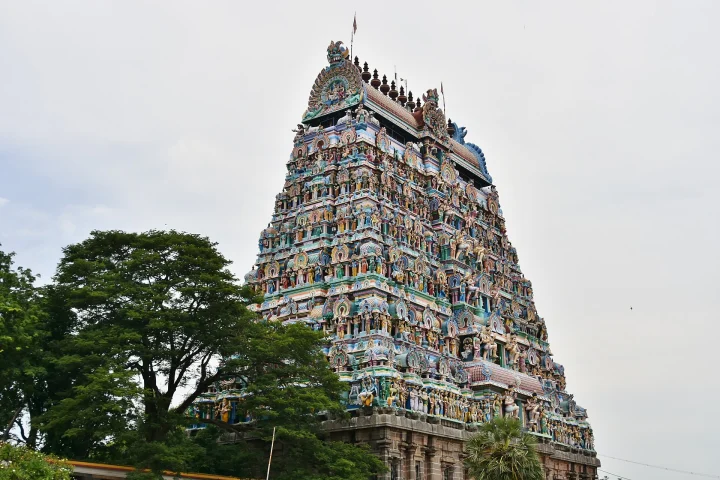
Lord Murugan – also called Kartikeya, Skanda, Subramanya and Kumaran – is loved across Tamil Nadu as the god of the Tamil land. Of his many temples, six are held in special reverence as the Arupadai Veedu, often translated as the six battle camps or six abodes. They are praised together in the Thirumurugatrupadai, a Tamil devotional poem of the Sangam period attributed to the poet Nakkeerar, which guides the devotee towards Murugan’s dwelling places.
This guide introduces each abode in its traditional order, then explains how to plan a pilgrimage to all six. If you want us to plan it, see our Arupadai Veedu tour from Trichy or the Arupadai Veedu circuit page.
On this page
1. Thiruparankundram
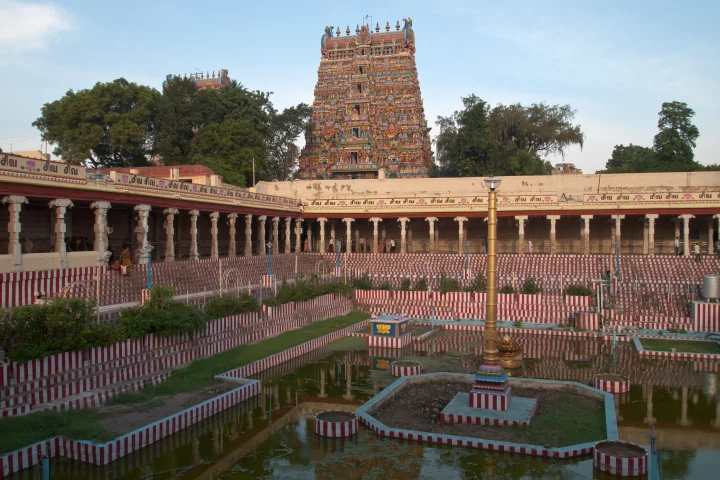
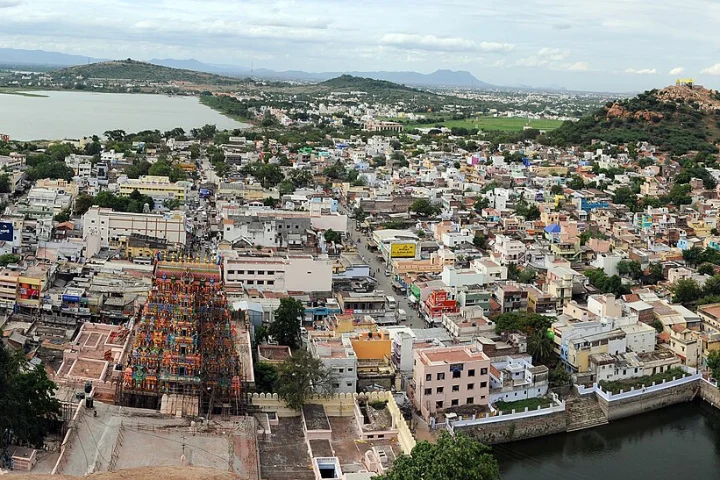
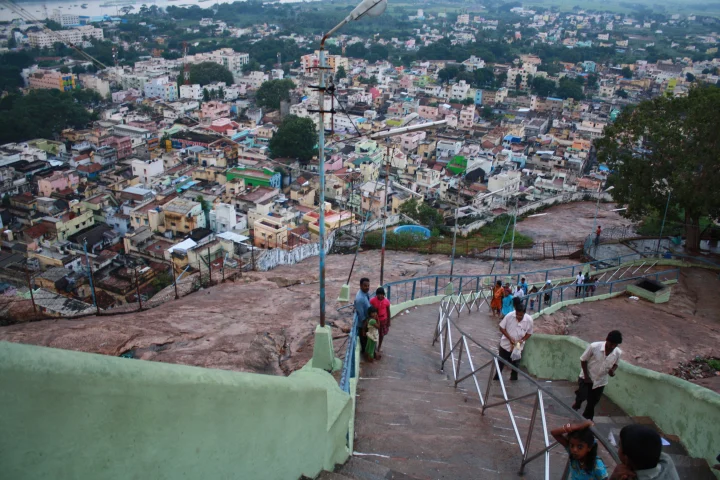
The first abode stands about 9 km south-west of central Madurai, at the foot of a large rock hill. According to tradition, this is where Murugan married Deivanai, the daughter of Indra, after his victory over the demon Surapadman, so the temple is popular for weddings and for prayers for marriage. The sanctum is cut into the rock, and several deities are enshrined together in it. Read more about the Thiruparankundram Murugan Temple.
2. Tiruchendur
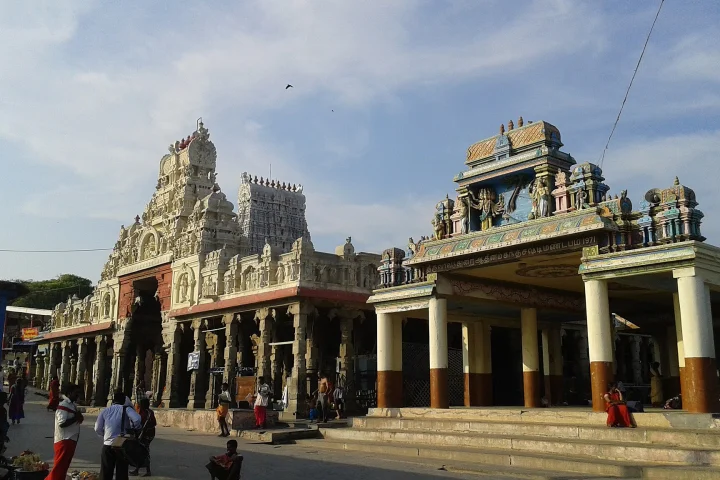
Tiruchendur is the only one of the six on the seashore, on the Gulf of Mannar coast of Thoothukudi district. According to tradition, Murugan camped here before his battle with Surapadman, and the victory is re-enacted every year on the beach during the Soorasamharam of the Kanda Sashti festival (Aippasi, October–November). Pilgrims often take a sea bath and bathe at the Nazhi Kinaru, a small freshwater well near the shore, before darshan. See the Tiruchendur Murugan Temple page.
3. Palani (Thiruvavinankudi)
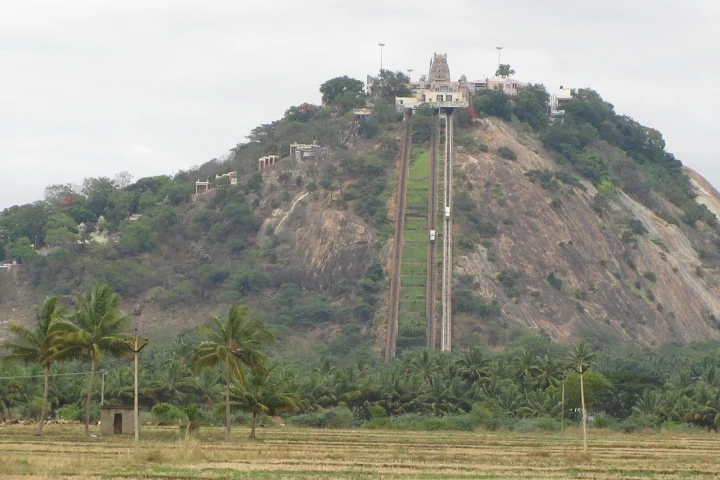
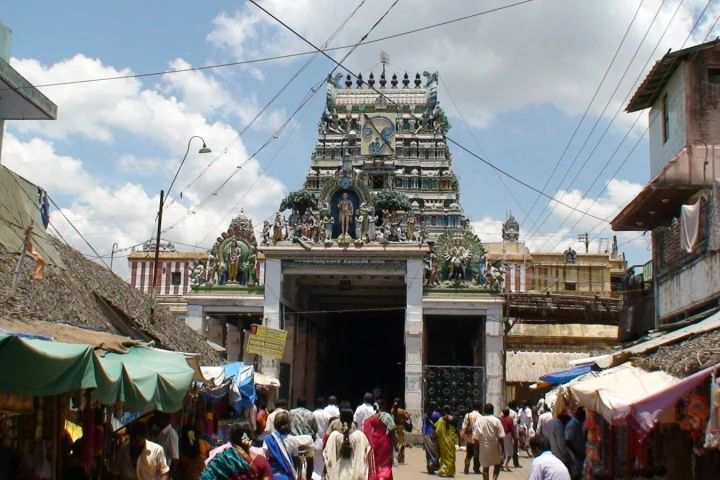
At Palani, in Dindigul district, Murugan is worshipped as Dhandayuthapani – a young renunciant holding a staff. According to the well-known story, after losing a contest for a divine fruit, he left his family and came to this hill; his mother consoled him by saying he was himself the fruit (“pazham nee”), which some link to the name Palani. The image on the hill is traditionally said to have been made by the siddhar Bhogar from a compound of nine minerals (navapashanam).
The hill temple can be reached by nearly 700 steps, by the winch (a rail-mounted trolley) or by the rope car. Thiruvavinankudi, the shrine at the foot of the hill, is counted as the abode in older texts. During Thaipusam (Thai, January–February) and Panguni Uthiram (March–April), lakhs of pilgrims walk to Palani carrying kavadi. See the Palani Dhandayuthapani Temple page.
4. Swamimalai
Near Kumbakonam, Swamimalai is where, according to tradition, the young Murugan explained the meaning of the sacred syllable Om to his father Shiva, and so is worshipped as Swaminatha – the teacher of the Lord. The shrine is built on a raised, man-made mound reached by 60 steps, which by tradition represent the 60 years of the Tamil calendar cycle. The town is also known for its bronze-casting workshops. See the Swamimalai temple page.
5. Tiruttani
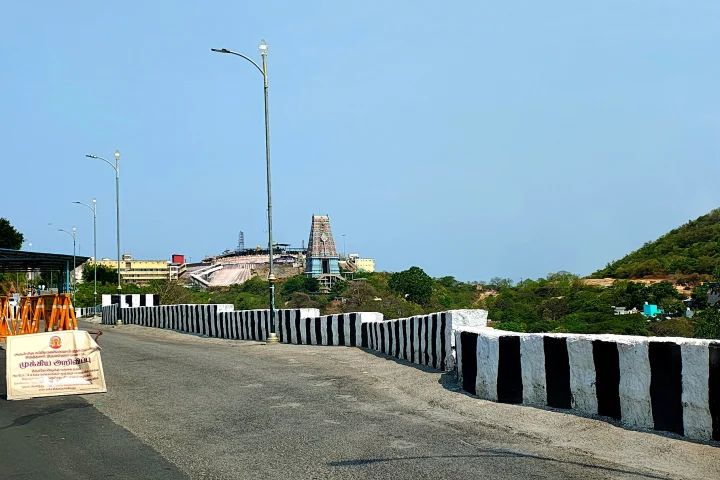
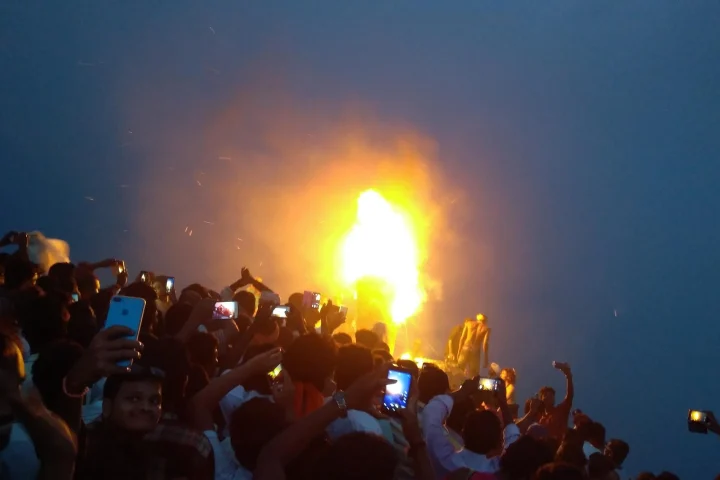
Tiruttani, in Tiruvallur district near the Andhra Pradesh border, is where Murugan is said to have rested and calmed his anger after the battle, and where, according to tradition, he married Valli, the daughter of a hill-tribe chief. The hill temple is reached by a ghat road or by a flight of 365 steps, said to represent the days of the year. On New Year’s Eve, devotees climb the steps singing hymns in the Padi Utsavam. See the Tiruttani Murugan Temple page.
6. Pazhamudircholai
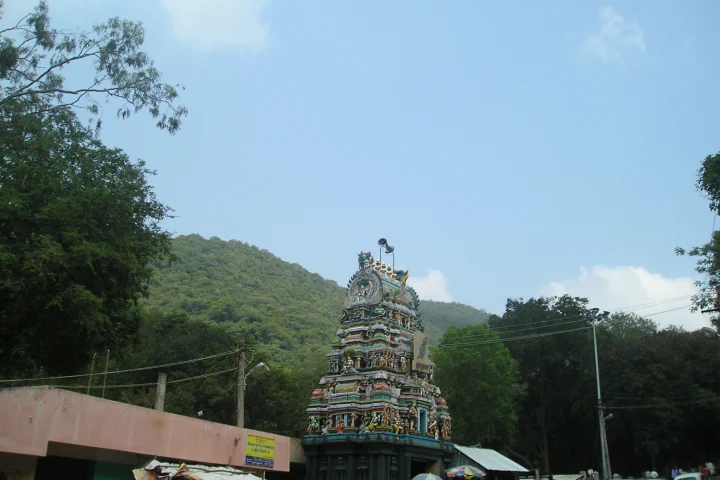
The sixth abode lies in the forested Alagar hills about 25 km north of Madurai, above the Kallazhagar Vishnu temple. According to a popular story, the poetess Avvaiyar met Murugan here disguised as a cowherd boy, who teased her with a riddle about “hot” and “cool” fruit. Near the shrine is the Noopura Gangai spring, which pilgrims visit as well. It is the quietest of the six and a pleasant drive through the woods.
Planning a pilgrimage to all six
The traditional order above is a sequence of devotion, not a route. Five of the abodes are in the south and centre of the state, but Tiruttani is far to the north – about 315 km from Trichy and 160 km from Pondicherry. A complete circuit is therefore usually done in one loop of five or six days, arranged by geography. Distances by road, approximately:
- From Trichy: Swamimalai about 80 km; Palani about 155 km; Madurai (for Thiruparankundram and Pazhamudircholai) about 140 km; Tiruchendur about 330 km; Tiruttani about 315 km.
- From Pondicherry: Tiruttani about 160 km; Swamimalai about 140 km; Madurai about 330 km; Palani about 355 km.
- A typical six-day loop from Trichy: Tiruttani, then Swamimalai, Palani, Thiruparankundram and Madurai, Pazhamudircholai and Tiruchendur, and back to Trichy.
Festivals across the six abodes
Festival dates follow the Tamil calendar and change every year. See our temple festivals calendar for more.
- Thaipusam (Thai, January–February) – biggest at Palani.
- Panguni Uthiram (Panguni, March–April) – celebrated at all Murugan temples; important at Palani and Thiruparankundram.
- Vaikasi Visakam (Vaikasi, May–June) – Murugan’s birth star.
- Kanda Sashti (Aippasi, October–November) – Soorasamharam on the beach at Tiruchendur.
- Karthigai (Karthigai, November–December) – lamps at all Murugan shrines.
Practical tips
- Tiruchendur and several other major temples do not allow smartphones inside; use the deposit counters.
- Wear comfortable, modest clothes for the hill climbs – see our dress code guide.
- The Palani winch and rope car have queues and maintenance days; keep the steps as a backup.
- Many devotees offer their hair at Palani and Tiruttani; tonsuring halls are near the foot of the hill.
- Most temples close in the afternoon from about 12:30 pm to 4 pm; hours vary – check before you go.
Kavadi, vows and offerings
Many Murugan devotees make a vow (vendudhal) and fulfil it at one of the six abodes. The best-known form is the kavadi – a decorated wooden arch carried on the shoulders, often while walking long distances to Palani for Thaipusam. Other offerings include milk pots (paal kudam), tonsuring the head, and lighting lamps. Each temple has counters for archana and abhishekam tickets, and staff will explain what is possible on the day.
If you are planning a vow, tell us when you book. We will make sure you reach the temple at the right hour, and where needed we can arrange to drop you at a starting point and meet you at the temple.
Plan with us
Call or WhatsApp +91 96265 65138 (24 hours) or write to us through the contact page. Short on time? Palani, Madurai and Tiruchendur also fit into our Grand Tamil Nadu temple tour.
Frequently asked questions
Which are the six Arupadai Veedu temples?
Thiruparankundram, Tiruchendur, Palani, Swamimalai, Tiruttani and Pazhamudircholai.
Which Murugan abode is on the seashore?
Tiruchendur, on the coast of Thoothukudi district, is the only one of the six by the sea.
How many days are needed for all six?
About six days by car from Trichy, or five to six from Pondicherry, because Tiruttani lies far to the north of the others.
Which abodes are near Madurai?
Thiruparankundram, on the edge of Madurai, and Pazhamudircholai, about 25 km north of the city in the Alagar hills.