Last updated:
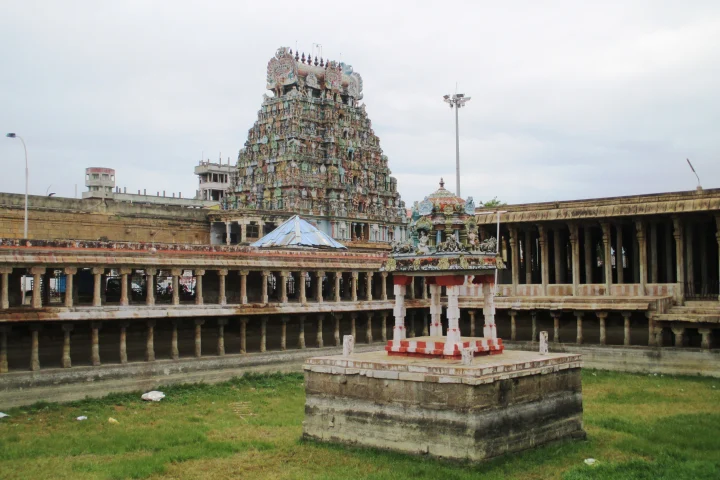
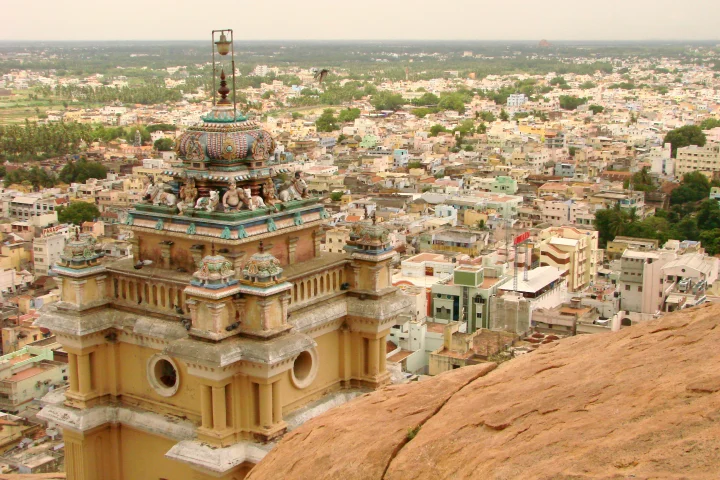
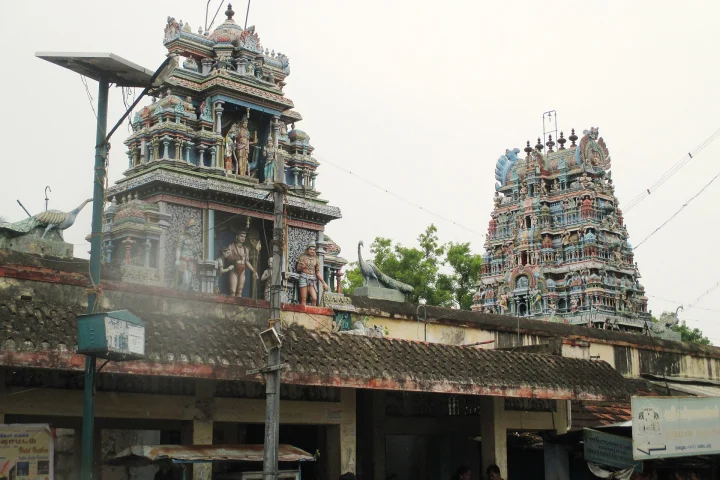
About 25 km north of Trichy, on the road to Thuraiyur, high granite walls rise from a low outcrop of white rock. This is Thiruvellarai, whose name means “sacred white rock”, and the walled temple of Pundarikakshan Perumal, Vishnu as “the lotus-eyed Lord”. From outside it looks more like a fort than a temple.
It is one of the 108 Divya Desams, praised in the hymns of Periyalvar and Thirumangai Alvar, and is run by the HR&CE Department together with the other temples of the Srirangam group.
On this page
Legends
According to the temple legend, King Sibi was camping here with his army when a white boar crossed his path. He chased it round the hill to the spot where the sage Markandeya was meditating. The sage told him that the boar was Vishnu himself, in his Varaha form. On the sage’s advice, the king filled the boar’s hole with milk, Vishnu appeared, and the king built the temple.
Another tradition says Goddess Lakshmi did penance here, and Vishnu appeared before her as the lotus-eyed Lord; this is why the Goddess has special importance at Thiruvellarai. Garuda, Bhudevi, Brahma and Shiva are among those said to have worshipped here.
The two gates of the sanctum
A special feature of Thiruvellarai is its two entrances to the sanctum. The Uttarayana Vasal is open for about six months from Thai (mid-January), and the Dakshinayana Vasal for the other half of the year, up to Margazhi. They mark the sun’s northward and southward journeys.
To reach the shrine you climb steps that the temple tradition links with sacred numbers: eighteen steps for the eighteen chapters of the Bhagavad Gita, then four for the Vedas and five for the elements.
History and architecture
- Pallava cave shrines: two unfinished rock-cut caves carry inscriptions of the Pallava kings Nandivarman II and Dantivarman (8th–9th century), along with sculptures of Narasimha and Varaha.
- The swastika well: outside the temple is a remarkable stepped tank shaped like a swastika, with four flights of steps. An inscription dates it to about 800 CE, in the reign of Dantivarman. It is protected by the Tamil Nadu State Archaeology Department and is well worth a short walk.
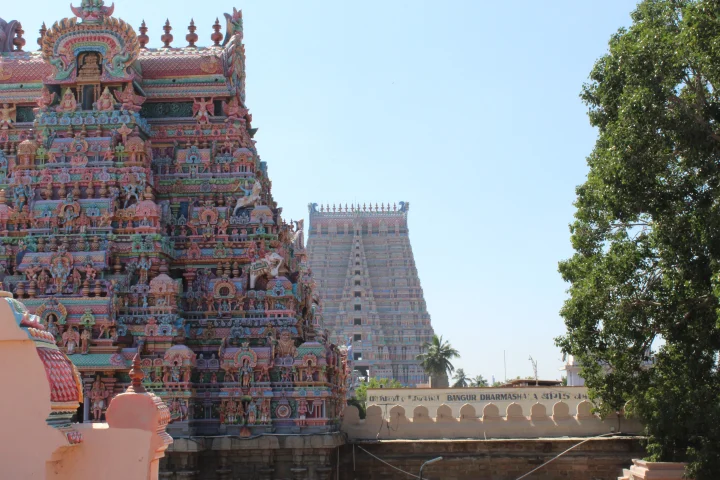
- The unfinished gopuram: the main gateway tower was never completed, which adds to the temple’s fortress look.
- Paintings and carvings: Vijayanagara and Nayak-era paintings of Krishna and the Ramayana remain on the shrine walls, and a pillar shows Krishna dancing on a pot.
- Echoing rooms: stone rooms on the south side are known for their echo.
Darshan tips
- Come in the morning: the rock and the courtyards heat up quickly in the afternoon.
- Ask our driver to stop at the swastika well before or after darshan; it is a short walk from the temple.
- Tradition holds that the Srivaishnava acharya Uyyakondar was born at Thiruvellarai; he has a shrine in the temple.
- Families pray here for children; the temple’s Chittirai festival is the busiest time.
Festivals and when to go
The Chittirai festival (April–May) is the most important event of the year, ending with the chariot festival. It is known for a community feast offered to devotees, a custom kept for centuries. The Panguni Brahmotsavam is held around the Thiruvonam star in March–April, and Sri Jayanthi (Krishna’s birthday) in Avani (August–September) has its own procession. Gajendra Moksham is also celebrated.
The temple has a free daily meal (annadhanam) scheme run by HR&CE, funded by devotees’ contributions.
Dress code, phones and photography
Wear modest, traditional clothes. Follow the notice at the gate; at the time of writing many temples allow phones only if switched off; photography inside is not allowed. See our temple dress code guide.
How to reach
From Trichy: about 22 km from the city centre and about 16 km from Srirangam, roughly 35–45 minutes via Mannachanallur.
From Pondicherry: about 200 km, roughly 4 to 4½ hours by road.
Trichy is the nearest railway junction and airport.
What to combine it with
Thiruvellarai is an easy half-day with Srirangam, and fits our Srirangam and Trichy temples day tour. Add Samayapuram or the Divya Desam at Koviladi for a fuller day. See the Divya Desams yatra and our Srirangam temple guide.
Frequently asked questions
Why does Thiruvellarai have two entrances to the sanctum?
One gate, the Uttarayana Vasal, is open for about six months from Thai (mid-January) and the other, the Dakshinayana Vasal, for the rest of the year, marking the sun’s two half-yearly journeys.
Where is the swastika well?
It is just outside the temple complex. The stepped tank has four flights of steps and dates from about 800 CE. It is protected by the Tamil Nadu State Archaeology Department.
How far is Thiruvellarai from Trichy?
About 22 km from the city centre and 16 km from Srirangam, roughly 35–45 minutes by road on the Thuraiyur road.
What are the temple timings?
Usually about 7:00 am to 1:15 pm and 3:30 pm to 8:00 pm. Check before you go.