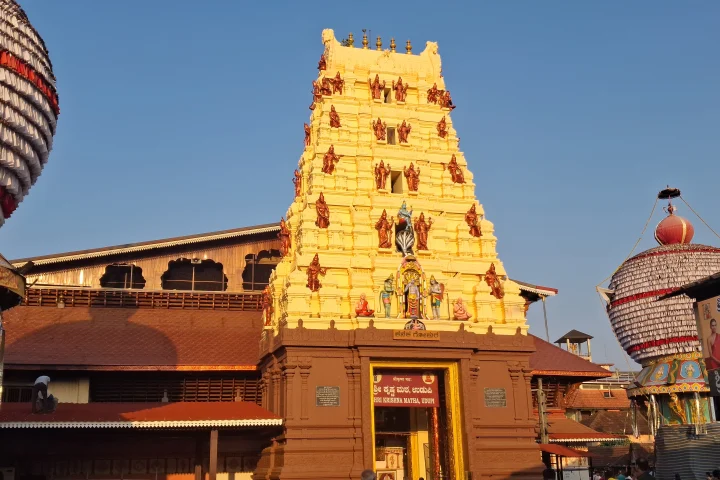
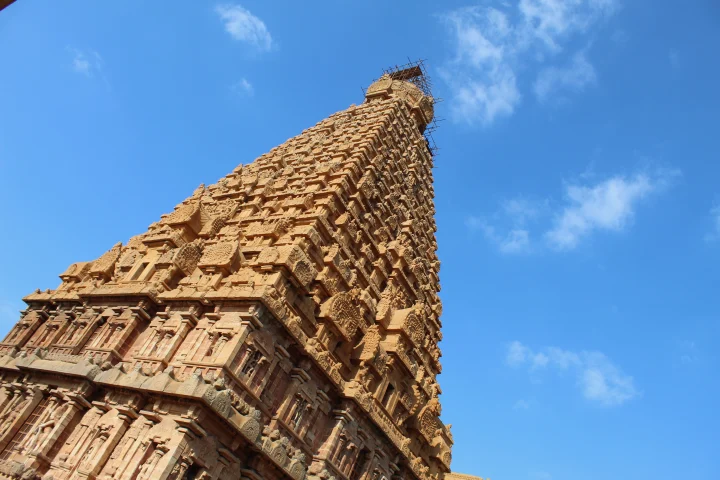
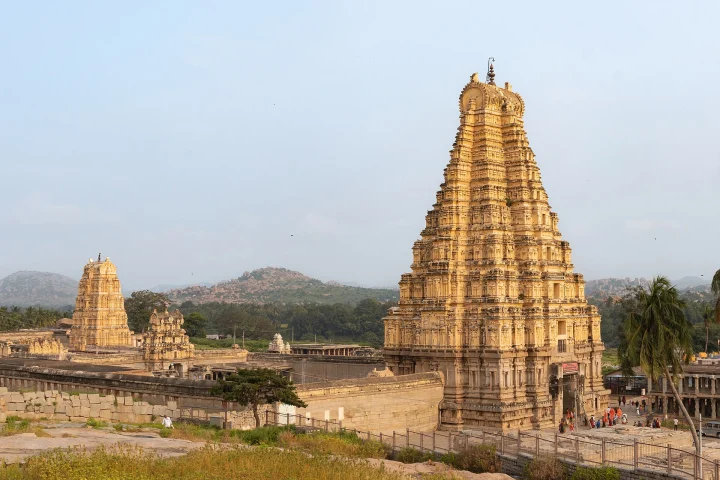
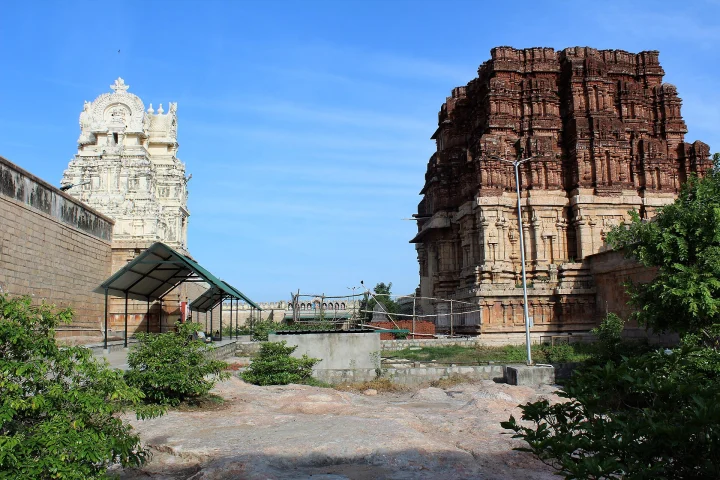
On an island formed by the Kaveri and its branch, the Kollidam, stands one of the great temples of India: the Sri Ranganathaswamy Temple at Srirangam. For Sri Vaishnavas it is simply “Koil” – the temple – and it is counted first among the 108 Divya Desams, the Vishnu temples praised in the hymns of the Alvar saints. The temple and the town are so intertwined that the inner streets of Srirangam lie within its outer walls.
We are based just across the river, and Srirangam is where many of our pilgrims begin. This guide covers the legend, what to see, how darshan works and the tips that make a visit easier. For the full temple profile, see the Srirangam Ranganathaswamy Temple page.
On this page
The deity and the legend
Lord Ranganatha, a form of Vishnu, reclines on the coiled serpent Adisesha in the sanctum, his head to the west and his face turned south. Goddess Ranganayaki, his consort, has her own shrine within the temple.
According to tradition, the image of Ranganatha was worshipped in Ayodhya by the ancestors of Lord Rama. After Rama’s coronation, it was given to Vibhishana, who was carrying it home to Lanka when he set it down on this island – and the Lord chose to stay, facing south towards Lanka. Over the centuries the temple grew with gifts and building by many dynasties, including the Cholas, Pandyas, Hoysalas and Vijayanagara rulers, and later the Nayaks of Madurai.
Scale and layout
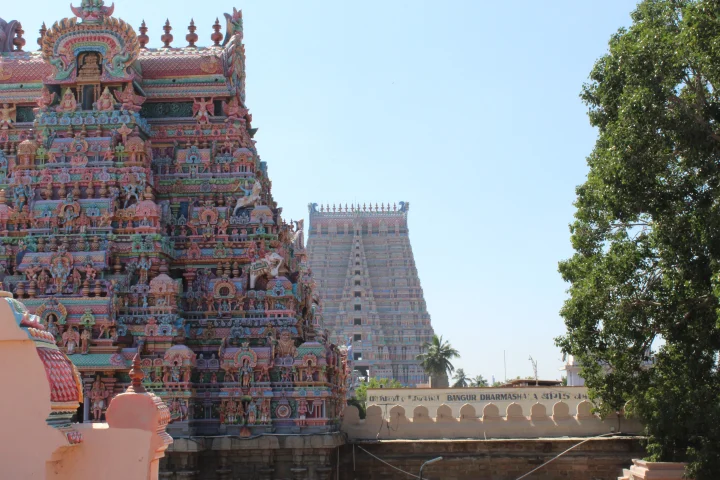
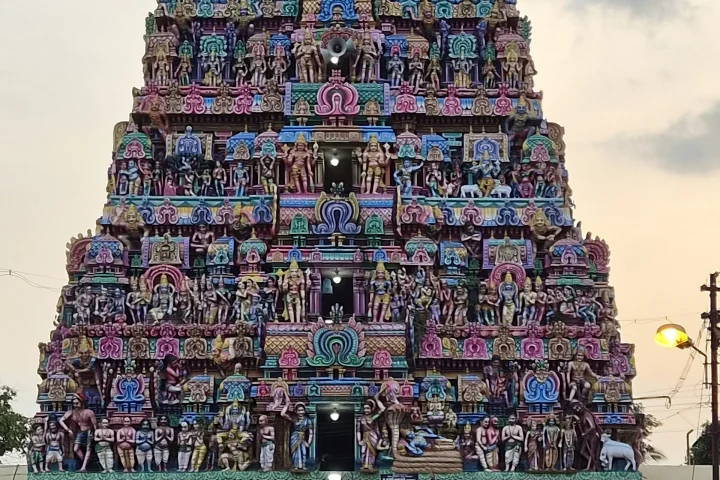
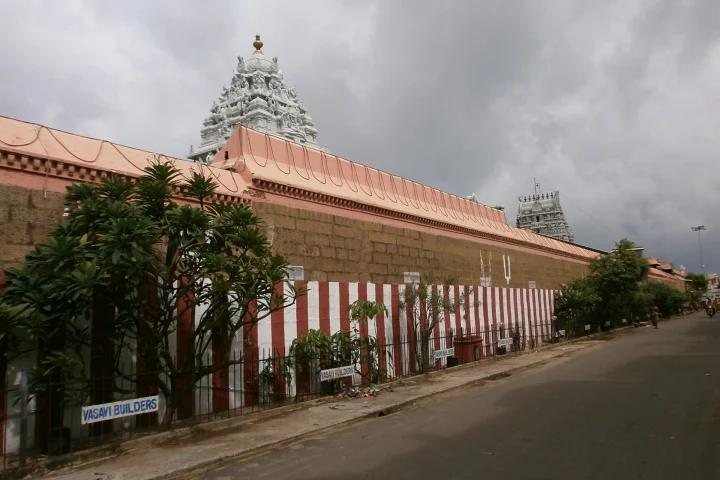
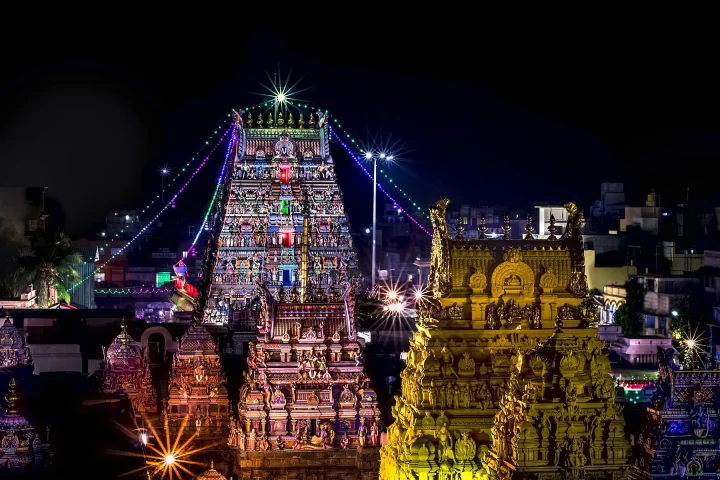
Srirangam is often described as the largest functioning Hindu temple in India. The complex covers about 155–156 acres, and its seven concentric enclosures (prakarams) are pierced by 21 gopurams. The outer enclosures hold homes, shops and streets; the inner ones hold the shrines and halls.
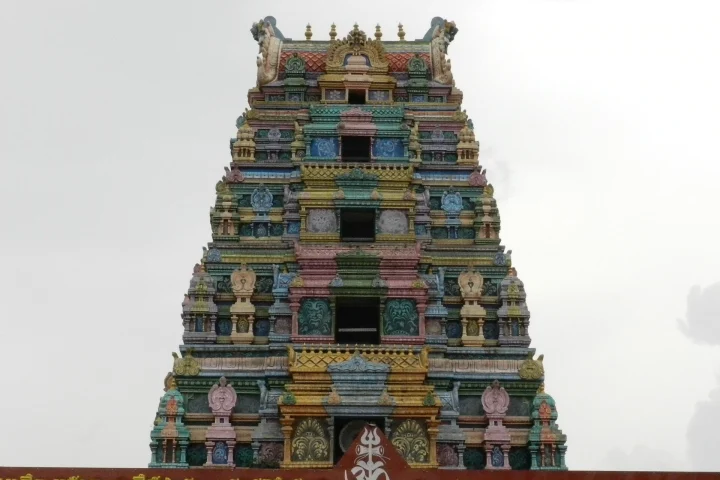
The southern Rajagopuram, the entrance most visitors use, was begun centuries ago but left unfinished until it was completed in 1987 under the 44th pontiff of the Ahobila Mutt. At about 73 metres, it is among the tallest temple towers in Asia. The white Vellai Gopuram on the eastern side is another landmark.
What to see
- The main sanctum of Lord Ranganatha, under its golden vimana
- The shrine of Goddess Ranganayaki
- The Garuda shrine facing the main sanctum
- The Sesharaya mandapam, with pillars carved as rearing horses and riders
- The thousand-pillared mandapam, used during the Vaikunta Ekadasi festival
- The shrines of Chakkarathazhwar (the Sudarshana chakra) and of the healer Dhanvantari
- The Udayavar shrine of Sri Ramanuja, the great teacher who lived and worked at Srirangam; according to tradition his body is preserved there
- The Paramapada Vasal (gate to heaven), opened during Vaikunta Ekadasi
How darshan works
General darshan is free. Paid queues for faster darshan are also available; buy tickets only at the official temple counters. The sanctum is open in the morning and evening, with several short closures during the day for poojas and offerings, and the exact schedule changes on festival days. Timings at the time of writing – check before you go.
Early morning, when the temple opens with the Viswaroopa darshan, is the best time for a calm visit. Weekends, Ekadasi days and Tamil months such as Margazhi and Purattasi are busy. Allow at least two to three hours to walk the inner enclosures as well.
Festivals
Dates follow the Tamil calendar and change every year. See our temple festivals calendar.
- Vaikunta Ekadasi (Margazhi, December–January) – the high point of a roughly 21-day festival of Pagal Pathu and Ra Pathu. The Paramapada Vasal is opened in the early hours, and the crowd is enormous.
- Brahmotsavams – several processional festivals through the year, when the festival image (Namperumal) is taken around the streets.
- Panguni Uthiram (March–April) – the joint darshan of the Lord and Goddess Ranganayaki.
- Aadi Perukku (July–August) – families gather on the Kaveri banks at the Amma Mandapam ghat.
Dress code and rules
- Traditional dress is expected: veshti or kurta-pyjama for men, saree or churidar with dupatta for women. Avoid shorts and sleeveless tops. See our dress code guide.
- Leave footwear at the counters outside the gopuram.
- Follow the gate notice about phones – at the time of writing many Tamil Nadu temples allow them only if switched off – and do not take photos inside. Photography inside the shrines is not permitted.
- Entry beyond certain points may be restricted to Hindus; follow the boards.
Nearby temples
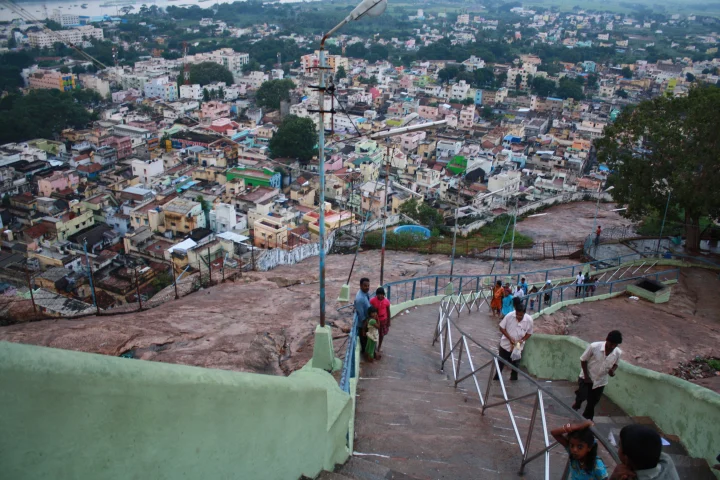
Thiruvanaikoil’s Jambukeswarar Temple, one of the five elemental Shiva temples, is about 2 km away. Samayapuram Mariamman and the Rockfort Ucchi Pillayar temple are each within about half an hour. All four fit into our Srirangam–Trichy temples day tour.
Getting there
- From Trichy city and Trichy Junction railway station: about 10–11 km, 25–30 minutes by road. Srirangam also has its own railway station.
- Tiruchirappalli International Airport is about 20 km away, around 40 minutes.
- From Pondicherry: about 200 km, 4 to 4.5 hours by road.
- Read more on our Trichy and Srirangam town page.
The island and the town
Srirangam is a river island, held between the Kaveri to the south and the Kollidam to the north. The streets around the temple are lined with traditional houses, pilgrim lodges, flower sellers and shops selling brass lamps and prayer items. Walking the outer streets – the Chitrai streets – in the early morning, when kolams are being drawn at the doorsteps, is a pleasure in itself. During processions the festival deity is carried through these same streets.
The Amma Mandapam bathing ghat on the Kaveri, a short drive from the temple, is where many pilgrims bathe or perform rites before darshan.
A suggested half-day
- Arrive at the Rajagopuram around opening time, leave footwear and phones at the counters.
- Walk through the outer enclosures to the inner gates; join the free or paid queue for the main sanctum.
- After darshan of Lord Ranganatha, visit Goddess Ranganayaki’s shrine.
- See the Sesharaya mandapam and the thousand-pillared hall, then the Udayavar shrine of Sri Ramanuja.
- Finish with the Chakkarathazhwar shrine and breakfast in the streets outside, then drive 2 km to Thiruvanaikoil.
Plan your visit
Call or WhatsApp +91 96265 65138 (24 hours) or use the contact page. Making a longer trip? Read how to plan a temple tour from Trichy.
Frequently asked questions
How much time is needed for Srirangam temple?
At least two to three hours for darshan and a walk through the inner enclosures; more on weekends and festival days.
Is there a fee for darshan at Srirangam?
General darshan is free. Paid queues for quicker darshan are also available at the official counters.
What is the best time to visit Srirangam temple?
Early morning on a weekday is the calmest. October to March is the most comfortable season.
When is Vaikunta Ekadasi at Srirangam?
In the Tamil month of Margazhi, usually in December or early January. The exact date changes every year.
How far is Srirangam from Trichy railway station?
About 11 km, which takes 25–30 minutes by road depending on traffic.