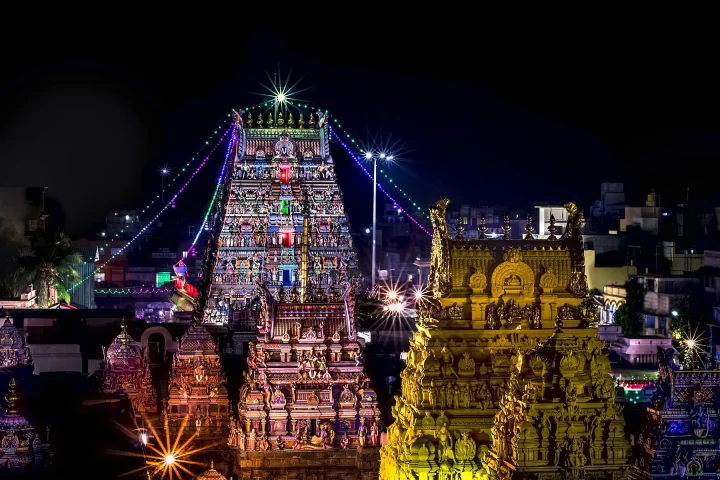
In the green delta of the Godavari and on the banks of the Krishna in Andhra Pradesh stand five old Shiva temples known together as the Pancharama Kshetras, the “five aramas” (sacred groves). For Telugu Shaiva devotees they are among the holiest places in the state, and in the month of Karthika thousands try to visit all five.
For pilgrims from Tamil Nadu they are less familiar, and a long way from home. This guide explains the story, the temples and the most comfortable way to see them.
On this page
The legend of the shattered lingam
According to the Puranic story told at these temples, the demon Tarakasura wore a Shiva lingam that made him invincible. In the battle against him, Kumaraswamy (Kartikeya, Lord Murugan) found that Tarakasura’s body kept coming back together. On the advice of Vishnu, he shattered the lingam, which broke into five pieces and fell at five places on earth. Each piece was consecrated and a temple raised over it, and so the five Pancharamas came into being. Tradition holds that the lingams still bear marks from the blow.
The five are also associated, in local tradition, with the deities said to have consecrated them: Indra at Amararama, Surya at Draksharama, Chandra at Somarama, Vishnu at Ksheerarama, and Kumaraswamy himself at Kumararama.
The five temples
Amararama – Amaravati
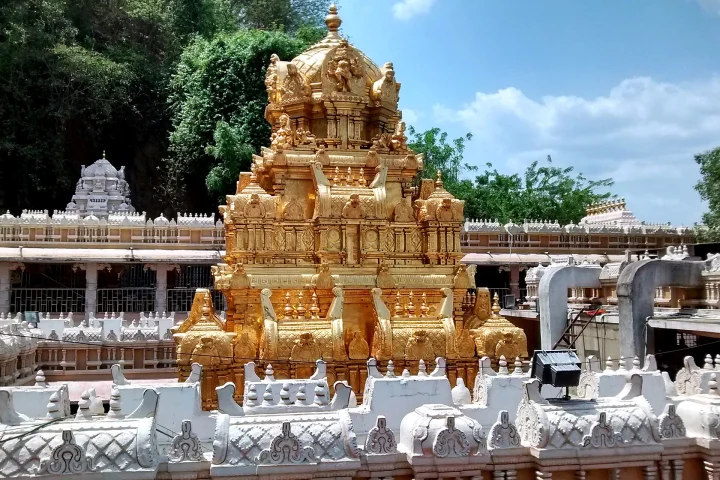
The Amaralingeswara Temple stands on the south bank of the Krishna at Amaravati, about 40 km from Vijayawada. Lord Amaralingeswara is worshipped with Goddess Bala Chamundeswari. The temple has three enclosures and many smaller shrines.
Draksharama – Draksharamam
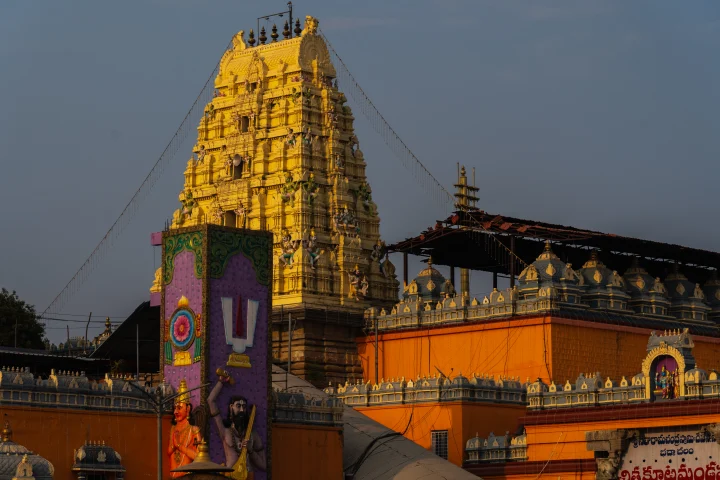
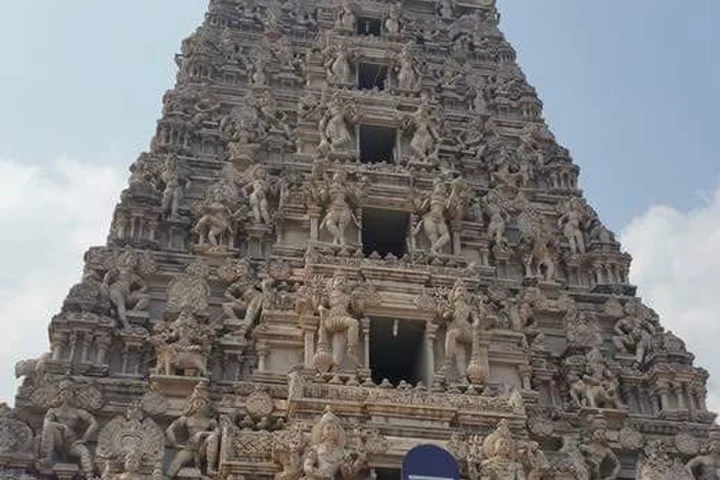
Draksharama Bhimeswara Temple, near Ramachandrapuram in the Konaseema region, is the largest of the five. Lord Bhimeswara is worshipped with Goddess Manikyamba, who is revered as one of the eighteen Shakti Peethas, so the temple is sacred to Shakta as well as Shaiva pilgrims.
Somarama – Bhimavaram
At Somarama, Lord Someswara is worshipped with Goddess Rajarajeswari. According to tradition, the lingam changes colour with the phases of the moon. The temple faces a sacred tank, the Chandra Kundam, and has a shrine of Goddess Annapurna on the upper floor.
Ksheerarama – Palakollu
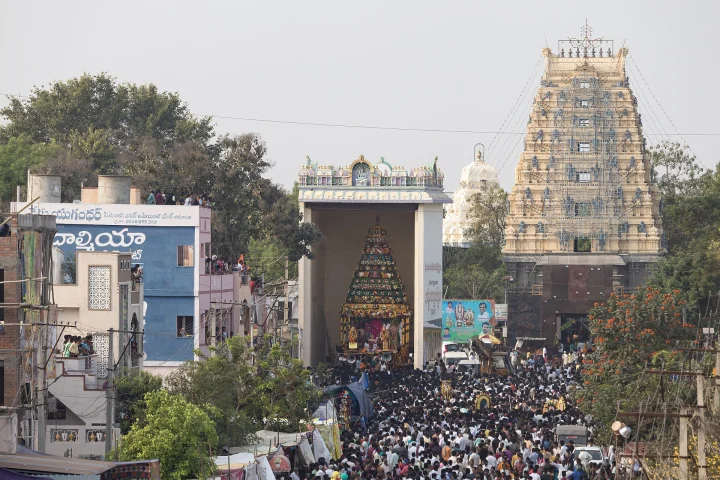
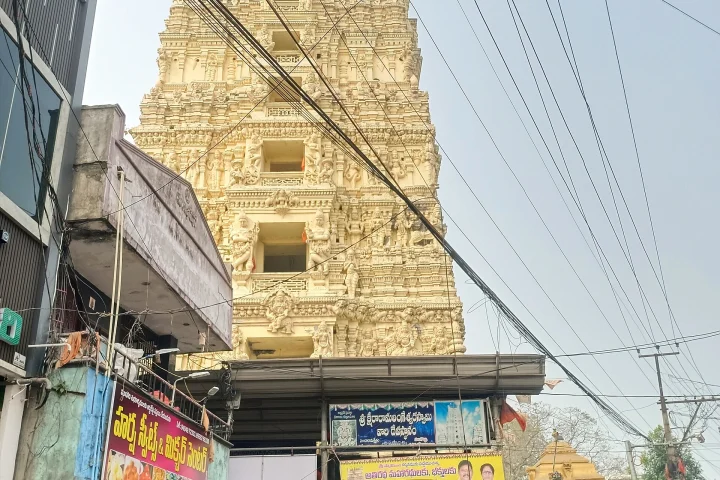
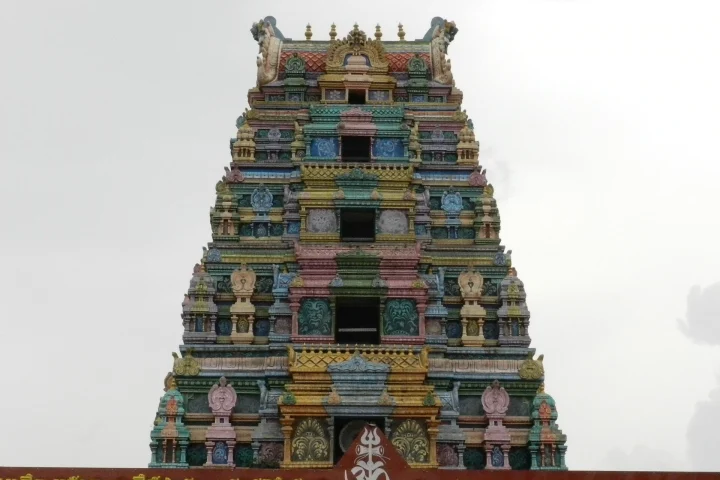
Ksheerarama, the temple of Lord Ksheera Ramalingeswara at Palakollu, is easy to spot thanks to its very tall gopuram. The name refers to milk (ksheera), which according to tradition sprang from the ground here. Goddess Parvati is worshipped as the consort.
Kumararama – Samalkot
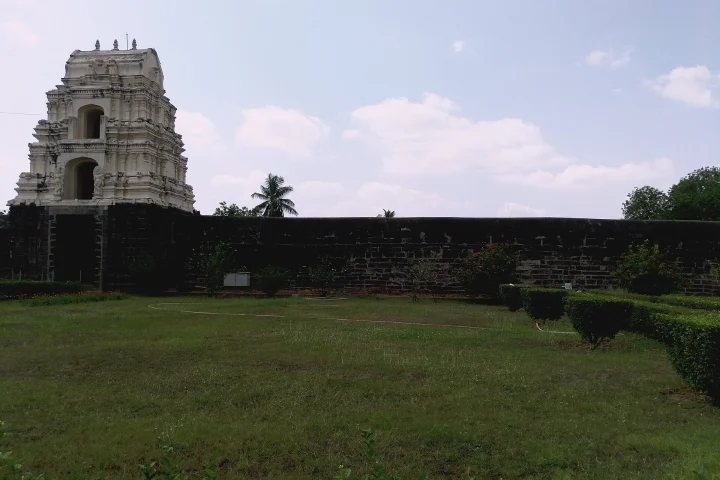
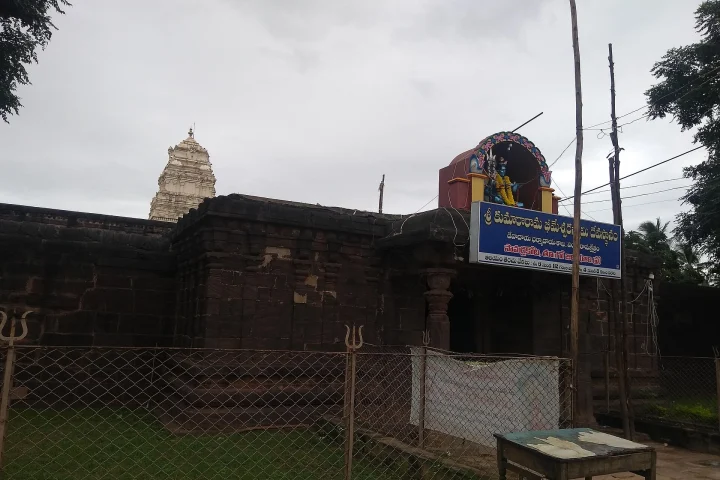
Kumararama at Samalkot (Samarlakota), near Kakinada, enshrines Lord Kumara Bhimeswara with Goddess Bala Tripurasundari. It is one of the best-preserved Eastern Chalukya temples and is looked after by the Archaeological Survey of India.
History in brief
Historians link several of these temples with the Eastern Chalukya kings who ruled coastal Andhra from Vengi from the 7th century onwards. Kumararama is most often attributed to King Chalukya Bhima I in the late 9th or early 10th century, and inscriptions at the other temples date from the 10th and 11th centuries. Scholars do not agree that one king built all five, so treat any single date you hear with care.
The best route
Four of the five temples lie in the Godavari delta within about 70 km of Rajahmundry, while Amaravati is near Vijayawada, about 200 km away. A comfortable plan is:
- Day 1: Amararama in the morning, then Goddess Kanaka Durga in Vijayawada in the evening.
- Day 2: Somarama (Bhimavaram) and Ksheerarama (Palakollu), about 24 km apart, then on to Rajahmundry.
- Day 3: Draksharama and Kumararama, about 42 km apart, with Annavaram Satyanarayana about 42 km beyond Samalkot.
- Some pilgrims prefer to start at Draksharama and end at Amaravati; the order does not change the merit, so plan it around opening hours and traffic.
All five in one day in Karthika
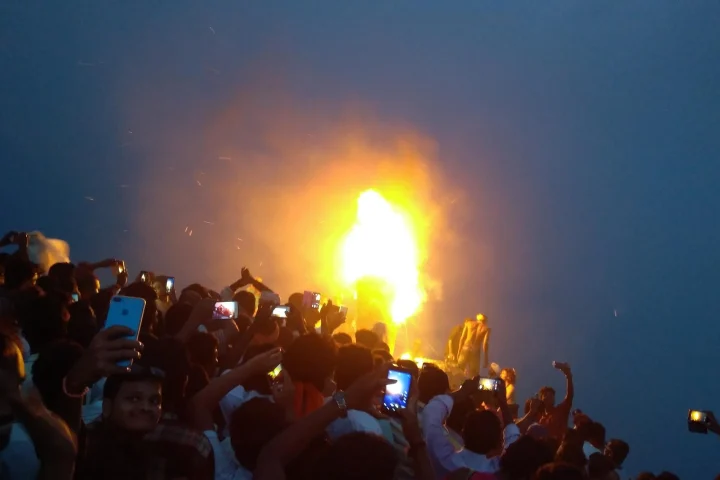
Karthika masam (October–November) is the holiest month for Shiva worship in Andhra, and Karthika Mondays are especially popular. In this month many devotees visit all five Pancharamas in a single day, starting before dawn and finishing late at night, and the state transport corporation and tourism department often run special Pancharama buses. It is a real achievement, but it means about 400 km on the road and short, crowded darshans. If you have elders in the group, two or three days is kinder.
Practical tips
- Most of the temples open early, close for a few hours around midday, and reopen in the late afternoon. Hours change in Karthika and on festival days – check before you go.
- Maha Shivaratri (February–March) is the other very busy time.
- November to February is the best weather; April to June is very hot on the coast.
- Traditional dress is expected; see our temple dress code guide.
- Annavaram is also famous for the Satyanarayana vratam; families often perform it on the hill.
Other temples on the way
The Pancharama route passes several other well-loved temples, and it is worth leaving a little time for them. In Vijayawada, Goddess Kanaka Durga on Indrakeeladri hill is the first stop for most pilgrims. Near Vijayawada, the Panakala Narasimha temple at Mangalagiri is known for its offering of jaggery water. Between Vijayawada and Rajahmundry, the Venkateswara temple at Dwaraka Tirumala near Eluru is called \”Chinna Tirupati\” by local devotees. And beyond Samalkot, the hill temple of Lord Satyanarayana at Annavaram is where many families perform the Satyanarayana vratam.
Rajahmundry itself, on the broad Godavari, has busy bathing ghats; an evening on the river bank is a peaceful end to a temple day.
Getting there from Tamil Nadu
By road, Vijayawada is about 620 km from Pondicherry and about 780 km from Trichy, so the full trip by car takes about six days from Pondicherry with nights at Nellore. Many pilgrims prefer to take a train or flight to Vijayawada or Rajahmundry and use a car only for the temple days. Our Pancharama Kshetras tour does both: the full drive from Pondicherry, or the temple days from Vijayawada. It combines well with Bhadrachalam and Yadadri or Srisailam; see also our Jyotirlinga temples yatra.
Frequently asked questions
What are the Pancharama Kshetras?
Five ancient Shiva temples in Andhra Pradesh: Amararama at Amaravati, Draksharama at Draksharamam, Somarama at Bhimavaram, Ksheerarama at Palakollu and Kumararama at Samalkot.
What is the story behind the Pancharamas?
According to tradition, Kumaraswamy shattered the lingam worn by the demon Tarakasura, and its five pieces fell at the five places where the temples stand.
Can I visit all five Pancharamas in one day?
Yes, many devotees do in the month of Karthika, but it means about 400 km of driving and short darshans. Two or three days is more comfortable.
Which is the best base for the Pancharama temples?
Rajahmundry for Draksharama, Kumararama, Somarama and Ksheerarama, and Vijayawada for Amararama.
Which Pancharama temple is a Shakti Peetha?
Draksharama, where Goddess Manikyamba is revered as one of the eighteen Shakti Peethas.